




The Spotlight and the Spiral
Imagine the walk. From the halfway line to the penalty spot, it’s a 50-yard journey that feels like a mile. The roar of 80,000 fans fades into a high-pitched hum. This isn’t just a test of technique; it’s a battle against the brain’s primal fear of public
failure. Sports psychologists call it the 'spotlight effect'—the feeling that every eye is on you, judging. Under this intense pressure, the conscious brain can interfere with muscle memory. A player who can effortlessly strike a ball a thousand times in practice suddenly starts *thinking* about the angle of their foot or the placement of their plant leg. This over-analysis, known as 'paralysis by analysis,' causes hesitation and stiffness, leading to a scuffed shot, a weak effort, or a complete misfire. The miss itself is just the beginning. The immediate aftermath—the player’s slumped shoulders, the opponents’ roar of celebration—sends a powerful, non-verbal signal to the teammates still waiting to take their turn.
The Psychology of Contagion
Failure is contagious. When the first or second player on a team misses, it doesn't just change the score; it changes the emotional reality for everyone else. The next player walking to the spot is now carrying an extra weight: the need to compensate. The thought process shifts from 'I need to score' to 'I *cannot* miss.' This subtle change is catastrophic. It frames the task in negative terms, focusing the brain on the possibility of failure rather than the process of success. This is a form of emotional contagion. The anxiety of the missed player is transferred to the group, creating a shared narrative of impending doom. You can see it in their body language. The walk to the spot becomes a little slower, the shoulders a little more hunched. They are no longer just taking a penalty; they are fighting against a newly formed pattern of failure established just moments before. In their minds, the story has already been written: 'Here we go again.'
From a Bad Night to a National Curse
When this pattern repeats over years, it hardens into something more formidable: a national curse. No team exemplifies this better than the England men's national soccer team. From 1990 to 2018, they were haunted by penalty shootouts in major tournaments. Every new competition brought with it a media frenzy rehashing past failures—Chris Waddle in 1990, Gareth Southgate in 1996, David Beckham in 2004. For a new generation of players, this creates a form of 'stereotype threat.' They aren't just taking a kick for their team; they are taking it against the ghosts of every English player who has ever missed before them. The narrative becomes so powerful that it's a self-fulfilling prophecy. The media asks, 'Can they finally break the curse?' The fans watch with dread instead of hope. The players internalize this external anxiety, making it exponentially harder to perform the simple act of kicking a ball into a net from 12 yards away. One miss decades ago helps create the conditions for the next one.
How to Break the Pattern
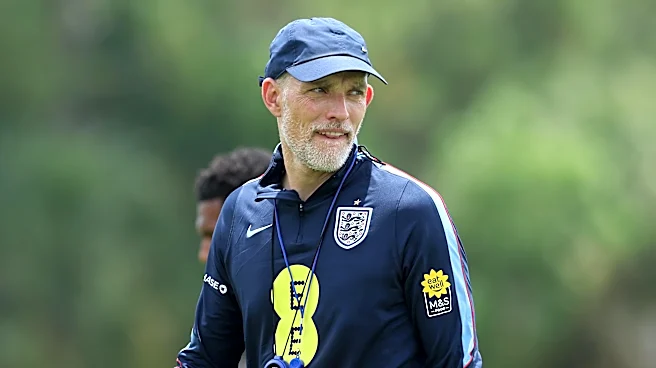
So how does a team break free? The solution is as much psychological as it is technical. Modern coaching staffs now employ sports psychologists to reframe the narrative. England, under manager Gareth Southgate—a man who intimately understood the pain of a critical miss—began to actively work on changing their mindset. They practiced penalties under simulated pressure, focusing on routine and process, not outcome. Players were encouraged to own their individual routine, making the moment theirs rather than a national burden. They studied goalkeepers' tendencies and replaced the narrative of chance with one of preparation. The goal is to shrink the moment down. It’s not about breaking a curse or saving a nation. It’s about one player, one ball, and one spot. By controlling the controllables and dismissing the historical noise, a team can begin to write a new story, one kick at a time. It’s not about guaranteeing every shot goes in, but about ensuring one miss doesn’t automatically mean the next one will, too.