
The Multi-Cam: A Live Play in Your Living Room
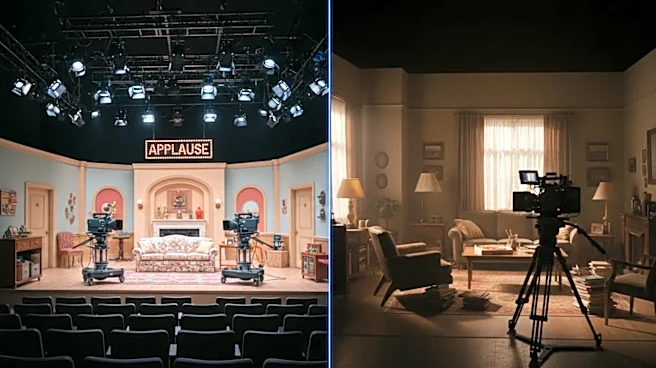
First, let's define our terms. The multi-camera comedy is the format many of us grew up with. Think Friends, Seinfeld, or The Big Bang Theory. These shows are typically filmed on a soundstage in front
of a live studio audience, using multiple cameras to capture the action simultaneously from different angles. The entire production feels like a stage play. The sets are often open on one side (the “fourth wall” is where the audience and cameras sit), and the action moves from room to room in a continuous flow. The energy is theatrical, the performances are pitched to a live crowd, and the writing is built around a distinct setup-punchline rhythm, with pauses deliberately left for audience laughter. It’s a format designed for maximum efficiency and a specific kind of joke delivery.
The Single-Cam: A Mini-Movie Every Week
Single-camera comedies, by contrast, are shot more like films. Despite the name, they often use more than one camera, but they film a scene one shot at a time (a master shot, then close-ups, etc.). This method allows for location shooting, more complex visual storytelling, and a different style of humor. Shows like The Office, Abbott Elementary, and Hacks are prime examples. There is no live audience and therefore no laugh track. The humor can be more subtle and observational, rooted in character behavior, awkward pauses, or visual gags that wouldn't work in a theatrical setting. The pacing is dictated by the editors, not by the need to wait for a laugh to subside. This format offers creative freedom but is also generally more time-consuming and expensive to produce.
Different Crafts, Different Performances
The core of the argument lies here: the two formats demand entirely different skill sets from everyone involved. An actor on a multi-cam show is performing for the people in the seats as much as for the cameras. Their timing has to be impeccable, their energy must project to the back of the room, and they have to land jokes in a rhythm that invites a live response. It's a discipline closer to theater. In a single-cam series, the performance is for the lens. Actors can be more naturalistic and subtle. A raised eyebrow or a quiet, muttered line can be the comedic highlight of a scene, something that would be completely lost on a live audience. Neither style is inherently superior, but judging a broad, theatrical performance against a quiet, cinematic one is a categorical error.
The Writer's Room Divide
The writing process is also fundamentally split. Multi-camera writers' rooms are often laser-focused on joke density, sometimes aiming for a certain number of laughs per page. The script is a blueprint for a live performance, with dialogue structured to build to a punchline that will reliably get a reaction. In contrast, single-camera scripts often have more room to breathe. The humor can emerge more organically from the plot or character interactions. These shows can blend comedy with drama more fluidly—creating the “dramedy” genre that now dominates prestige TV—because they aren't obligated to service a laugh track. A single-cam script might prioritize a poignant moment over a gag, a choice that is structurally difficult in a classic multi-cam format.
A Tale of Two Directing Styles
Finally, the director's job is completely different. A multi-camera director is, in many ways, a ringmaster for a live event. They are managing multiple camera feeds in real-time, guiding the actors' stage performance, and ensuring the show flows smoothly for the audience. A single-camera director, however, is a cinematic storyteller. They have granular control over every frame, choosing the camera angles, lenses, and lighting to craft a specific tone or land a visual joke. They build the comedy in the edit suite as much as on the set. The Television Academy implicitly acknowledges this distinction by having separate Emmy categories for picture editing in multi-cam and single-cam comedies. Why not extend that same logic to the main prize?