



The Definition of Clutch: Andrés Iniesta
To understand what a clutch World Cup goal looks like, you start with Andrés Iniesta. The year is 2010. The World Cup Final between Spain and the Netherlands is a brutal, scoreless war of attrition deep into extra time. With just four minutes separating
the world from the random cruelty of a penalty shootout, the ball falls to the diminutive midfielder. He doesn't slash at it. He doesn't panic. He controls it perfectly and rifles a volley into the far corner. It was Spain’s first and only World Cup title, delivered by one of the most technically perfect and pressure-proof goals in the history of the sport. It wasn’t just a game-winner; it was a legacy-forging, history-making strike that embodied Spain's entire golden generation.
The Complicated King: Zinedine Zidane
Zinedine Zidane’s career is a masterclass in clutch moments and complex endings. While his 2006 final is remembered for a headbutt, don’t forget what came first: a Panenka penalty of unbelievable audacity to give France the lead. But his true clutch masterpiece was the 1998 World Cup Final. In front of a roaring home crowd in Paris, with the weight of a nation on his shoulders against a heavily favored Brazil team led by Ronaldo, Zidane was transcendent. He scored two towering headers from corner kicks, dismantling the favorites and securing France’s first-ever World Cup. He wasn't a prolific goalscorer, but when the stakes were highest, he found a way to be the most dominant player on the field.
The Substitute Savior: Mario Götze
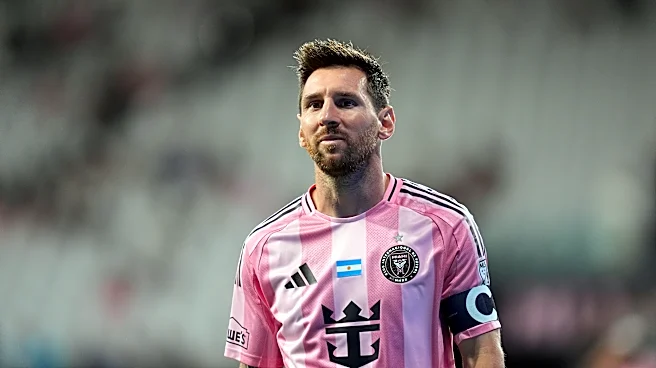
Sometimes, the clutch hero is the one you least expect. In the 2014 World Cup Final, Germany and Argentina were locked in another 0-0 extra-time stalemate. The narrative was all about Lionel Messi finally capturing the one trophy that eluded him. But German coach Joachim Löw turned to his bench, telling 22-year-old substitute Mario Götze, “Show the world you are better than Messi.” In the 113th minute, Götze did just that. He chested down a cross from André Schürrle and, in one fluid motion, volleyed the ball into the net. It was a moment of sublime technique executed under suffocating pressure, a single touch of brilliance from a player who came off the bench to win the World Cup and become an instant national hero.
The Redemption Song: Ronaldo Nazário
Ronaldo’s story is the ultimate clutch narrative because it’s about redemption. In 1998, he was a ghost in the final after a mysterious pre-game convulsive fit. The world wondered if he’d ever recover. Four years and two catastrophic knee injuries later, he arrived at the 2002 World Cup. He wasn't just good; he was unstoppable. After scoring in every knockout game leading up to the final, he faced a formidable German side and their legendary goalkeeper, Oliver Kahn. Ronaldo scored both goals in a 2-0 victory. The first was a poacher’s finish, pouncing on a rare Kahn mistake. The second was a clinical strike from the edge of the box. He finished the tournament with eight goals, exorcising the demons of 1998 and cementing his legacy as one of the greatest strikers ever.
The Heir Apparent: Kylian Mbappé
If there’s one active player who belongs in this tier, it’s Kylian Mbappé. He has already built a resume of clutch moments that rivals seasoned legends. As a teenager in 2018, he scored in the final to help France lift the trophy. But his performance in the 2022 World Cup Final was the stuff of legend. With France trailing Argentina 2-0 and looking completely lifeless, Mbappé erupted, scoring two goals in 97 seconds to force extra time. After France went down again, he coolly converted another high-pressure penalty to complete his hat-trick—the first in a men's final since 1966—and force a shootout. Though France lost, his refusal to be beaten under the brightest lights proved he possesses the rare, ice-cold mentality of a true clutch finisher.