





The End of the Story?
To understand the strange, Michael Myers-less 'Halloween III,' you have to go back to 'Halloween II.' For creators John Carpenter and Debra Hill, the 1981 sequel was meant to be the definitive end of the Michael Myers saga. They reluctantly wrote the film,
concluding it with both Michael and Dr. Loomis consumed in a fiery explosion, a seemingly unambiguous finale. As far as they were concerned, the story of the silent stalker from Haddonfield was over. The massive success of the first two films, however, meant the studio wanted more. Carpenter and Hill agreed to stay on as producers for a third installment, but only on one condition: no more Michael Myers.
A Grand Anthology Idea
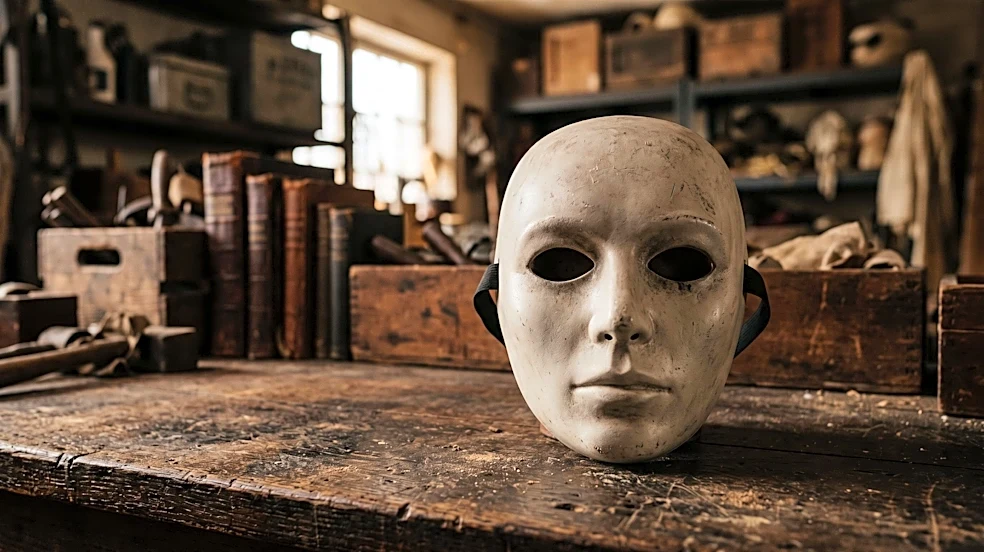
Carpenter and Hill had a far more ambitious vision for the franchise's future. They proposed turning 'Halloween' into an anthology series, where each year would bring a new, self-contained horror story centered on the holiday itself. 'Halloween III: Season of the Witch' was the first attempt at this model. Directed by Tommy Lee Wallace, who had worked on the original film, it was a completely new story. The plot was a sci-fi-infused paranoid thriller involving a sinister mask company, ancient Celtic rituals, deadly microchips, and Stonehenge. The idea was to explore different facets of Halloween horror, moving beyond the slasher formula and creating something new and unpredictable for audiences each October.
Audience Revolt and a Box Office Warning
The problem was that nobody told the audience. The title, 'Halloween III,' created a clear expectation: the return of Michael Myers. When viewers showed up to theaters expecting the third chapter of their favorite slasher and instead got a bizarre tale of killer masks, they felt betrayed and confused. The film was met with a cold response from critics and moviegoers alike. Financially, the results were a clear warning sign. While the original 'Halloween' grossed over $47 million domestically and 'Halloween II' pulled in a respectable $25.5 million, 'Season of the Witch' stalled at just $14.4 million. Though it wasn't a total bomb against its small $2.5 million budget, the significant drop-off was a commercial disappointment that sent a clear message to the producers.
The Inescapable Return of Michael Myers
The financial fallout from 'Halloween III' was immediate and decisive. The grand anthology experiment was declared a failure. The producers understood the lesson loud and clear: audiences weren't paying for a brand name called 'Halloween'; they were paying for Michael Myers. Six years later, in 1988, the franchise returned with a very pointed title: 'Halloween 4: The Return of Michael Myers.' This entry ignored the events of 'Season of the Witch' entirely, resurrecting its iconic villain and returning to the familiar slasher format. The decision paid off, with 'Halloween 4' earning $17.8 million, outgrossing its predecessor and solidifying Michael's place as the irreplaceable center of the series.
A Cult Classic with a Lasting Lesson
Decades later, 'Halloween III: Season of the Witch' has undergone a significant reappraisal. It's now celebrated by many horror fans as a weird, ambitious, and unique standalone '80s horror film with a killer synth score and a genuinely creepy premise. Its initial failure, however, remains its most important legacy in business terms. It became one of Hollywood's most potent case studies in franchise management. The film proved that, for better or worse, audiences build loyalty with characters, not just concepts. The backlash demonstrated that once a figure like Michael Myers becomes synonymous with a title, removing him isn't a creative pivot—it's a breach of contract with the audience. Every franchise sequel that prioritizes bringing back a beloved star, no matter how convoluted the plot, owes a small debt to the bold, cautionary tale of 'Halloween III.'