




From a Darker Forest
The journey to the screen began with Felix Salten's 1923 novel, "Bambi, a Life in the Woods." The book was not the gentle story we know today; it was a somber, allegorical tale for adults about the harsh realities of nature and the cruelty of humankind.
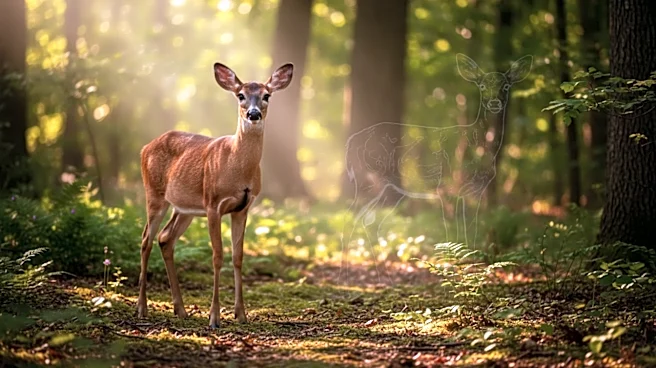
In Salten's telling, Bambi is a roe deer, a species native to Europe, and the narrative is a more realistic and often grim depiction of survival. When Walt Disney acquired the rights in 1937, his initial impulse was to honor this naturalism. Early development aimed for a faithful, almost photorealistic portrayal of forest life, a stark departure from the more cartoonish animals seen in films like "Snow White and the Seven Dwarfs."
The Problem with Pure Realism
As production slowly moved forward, Walt Disney grew dissatisfied. The problem with a truly realistic deer was that it lacked personality. Animators struggled to convey the deep emotion the story required through a creature that looked exactly like its real-world counterpart. Disney famously said that if he wanted perfect realism, he would have just photographed deer instead of drawing them. The studio even brought live fawns, affectionately named Bambi and Faline, onto the lot for artists to study, alongside anatomy experts like Rico LeBrun who taught the animators about animal structure and movement. But accuracy wasn't enough. The character needed to be believable and emotionally resonant, not just a technically perfect drawing.
Creating Emotional Anatomy
The breakthrough came from a conscious decision to pivot from realism to caricature. The goal, as animator Ollie Johnston put it, was to create a character that was "believable, not realistic." Animator Marc Davis was key in cracking the code. He began to incorporate the features of human babies into the fawn's design, studying their expressions and proportions. The result was the Bambi we recognize today: a fawn with an oversized head, large, expressive eyes set low on the face, a shortened snout, and a delicate, slightly clumsy body. These baby-like features instantly made the character more vulnerable, innocent, and relatable, allowing the audience to connect with his journey on a deeply emotional level.
A Forest of Feeling, Not Facts
The character's new look required a world that matched it. The initial highly detailed, literal backgrounds were clashing with the more stylized character. The solution came from an unlikely source: a junior artist named Tyrus Wong. Wong, a Chinese-American immigrant, was working as an "in-betweener," a tedious entry-level job. Inspired by the lyrical landscapes of the Song dynasty, he created sample paintings of the forest that were impressionistic and atmospheric. Instead of drawing every leaf and branch, Wong used soft washes of color, light, and shadow to evoke the feeling of the woods. When Walt Disney saw Wong's work, he was ecstatic, recognizing that this poetic style was exactly what the film needed. He promoted Wong and instructed the entire art department to follow his lead, giving "Bambi" its unique, dreamlike quality that set it apart from all other animated films.