






The Death of Patient Mystery
Remember the central mystery of Close Encounters of the Third Kind? For the first hour, we have no idea what’s happening. Richard Dreyfuss’s Roy Neary is compelled by an idea, a shape, a sound. He doesn’t know what it is, and neither do we. The film builds
its sense of awe by withholding information, forcing the audience to lean in and experience the unknown alongside the characters. Now, consider the logic of streaming. The algorithm needs you to click, and it needs you to stay. Trailers, thumbnails, and even opening scenes are often designed to give away the entire premise in seconds. A show’s 'mystery' is frequently a puzzle box to be solved and debated on Reddit after a weekend binge, not a feeling to be savored over two hours in a dark room. The streaming model rewards immediate hooks and rapid plot delivery, making the deliberate, slow-burn wonder of a classic Spielberg encounter feel like a radical act of storytelling.
Event vs. Endless Content
There was a time when a major film release was an appointment. You planned your week around it. You gathered your friends, bought tickets, and participated in a collective cultural moment. A Spielberg UFO film would have been the epitome of this: a must-see event built on a grand scale that demanded the big screen. It was a shared experience. The streaming era has inverted this dynamic. Entertainment is no longer an event; it's 'content'—an infinite, on-demand utility, like running water. We watch alone, on different schedules, on screens of varying sizes. The conversation, if it happens at all, is fractured across time and social media feeds. This transforms movies from communal campfires into individual snacks. The refreshing power of the theatrical UFO movie lies in its implicit promise of community. It suggests that some stories are too big, too awe-inspiring, to be experienced on a laptop with one eye on your phone. It reminds us that watching together is a fundamentally different, and often richer, experience.
Spectacle with a Human Heart
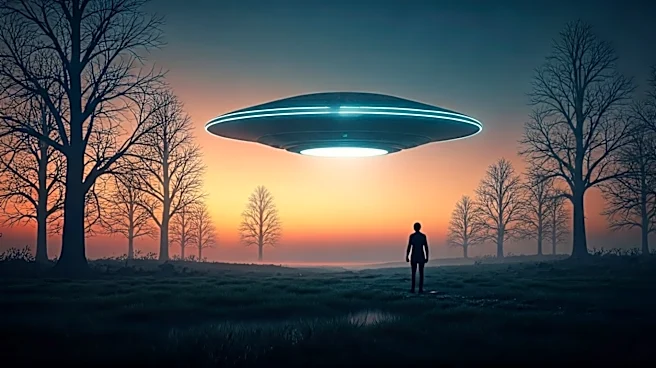
Both streaming services and modern blockbusters are full of spectacle. We see cities crumble and fantasy worlds rendered in stunning CGI every week. But much of it feels weightless and detached. The 'Spielberg face'—that iconic shot of a character looking up in slack-jawed wonder—is more than a directorial tic. It’s a filmmaking philosophy. It grounds the extraordinary in a relatable human emotion: awe, fear, curiosity. The UFOs in Close Encounters are spectacular, but the movie is about a man’s obsession and a mother’s grief. E.T. the Extra-Terrestrial has a spaceship, but it’s a story about friendship and loneliness. The spectacle serves the human story, not the other way around. In a landscape often dominated by algorithmically-optimized content designed to hit specific demographic quadrants, this focus on earnest, uncynical emotion feels revelatory. It’s a reminder that the most impressive special effect is making the audience feel something.
The Return of the Unknown
Perhaps the most refreshing element is the return to genuine unknowns. Spielberg’s aliens weren’t part of a pre-existing cinematic universe. They weren’t a setup for a sequel or a spin-off series. They were simply… other. Their arrival was a singular event, filled with possibility and dread. The audience went in clean, without the baggage of established lore or fan theories dictating the narrative. Today, so much of our blockbuster entertainment is built on intellectual property, on delivering a familiar brand in a slightly new package. We go into a Marvel or Star Wars project largely knowing the world and its rules. A standalone, original UFO story from a master like Spielberg would cut through that noise. It offers the thrill of a blank page, a story where anything can happen because we haven’t been told what’s supposed to happen. It’s the promise of true discovery, a feeling that has become all too rare in our content-saturated world.