




The Myth of a Formal Ban
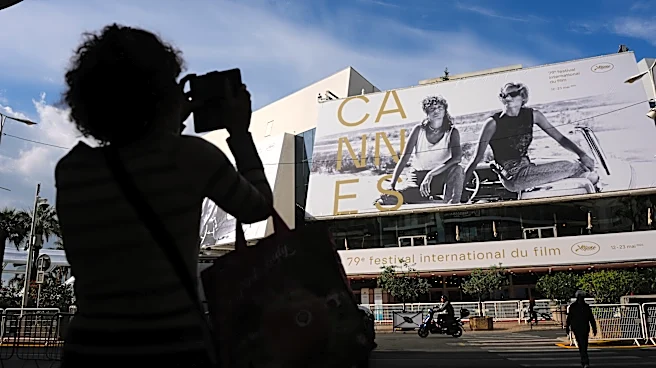
Let’s get one thing straight: the Cannes Film Festival has no official policy titled the “Nude Illusion Dress Ban.” If you search the festival’s official rulebook, you won’t find it. What you will find is a notoriously strict, if sometimes vaguely defined, dress code. For decades, gala premieres have demanded black tie for men (tuxedo, no exceptions) and formal evening wear for women. The drama arises not from a ban on a specific style, but from the enforcement of this nebulous standard.The most infamous example wasn't about a dress at all. In 2015, reports surfaced that multiple women, some in their 50s and one with a medical condition, were turned away from a screening of Carol for wearing rhinestone-studded flat shoes. The resulting uproar,
dubbed “Heelgate,” forced festival director Thierry Frémaux to apologize and clarify that heels were not an official requirement. The incident perfectly illustrates the Cannes conundrum: its sense of old-world decorum often clashes with modern reality, creating scandals where none need to exist.
The Original Red Carpet Rebels
Before the modern “naked dress” became a red-carpet staple, Cannes was already a stage for fashion provocation. The standard was set in the 1950s by Brigitte Bardot. While not a nude dress, her decision to wear a bikini on the beach at Cannes in 1953 was a cultural bombshell that helped popularize the two-piece swimsuit worldwide. She treated the entire Côte d'Azur as her personal photo-op, establishing a blueprint for stars leveraging the festival for global attention.Fast-forward to 1991. Madonna arrived for the premiere of her documentary Truth or Dare not in a demure gown, but in a pink satin coat that she dramatically threw open on the red carpet steps to reveal a Jean Paul Gaultier conical bra and corset ensemble. It was pure theater, a deliberate act of defiance against the festival’s stuffy protocols. These moments weren’t about illusion; they were about flagrant, unapologetic rebellion, proving that a star’s sartorial choices could generate as many headlines as the films themselves.
The Era of Sheer and Strategic Cutouts
The 2010s ushered in the true age of the nude illusion dress, a trend supercharged by social media and the 24/7 news cycle. The goal was to create a viral moment, and no one understood the assignment better than Bella Hadid. Her 2016 appearance in a red Alexandre Vauthier gown with a hip-high slit wasn't just a dress; it was an engineering marvel and a masterclass in calculated risk. It became one of the most talked-about images of the festival, cementing her status as a Cannes icon.Hadid and her contemporaries, like Kendall Jenner in a series of daringly sheer gowns or Irina Shayk in barely-there Versace, perfected the art. These weren’t just see-through fabrics; they were meticulously designed garments using illusion panels, intricate beading, and gravity-defying cuts to toe the line between couture and nudity. The festival never issued a formal rebuke. Why would it? These looks dominate news feeds and keep Cannes culturally relevant in an age of ever-shrinking attention spans.
The Unspoken Rules of Rebellion
So, if there's no ban, what are the rules? The real code is an unspoken one. A risqué dress on a relatively unknown actress might be perceived as desperate, but on an A-lister like Julia Roberts—who famously went barefoot on the red carpet in 2016 to protest “Heelgate”—it’s read as a powerful statement. The same goes for Kristen Stewart, who became the poster child for fashionable protest when she repeatedly kicked off her Christian Louboutin heels on the red carpet in 2018.This is the core tension: Cannes wants the prestige of its formal traditions, but it needs the buzz that comes from breaking them. The festival thrives on the very scandals it publicly decries. The nude illusion dress isn’t a threat to Cannes; it’s part of a symbiotic relationship. The stars get their viral moment, the designers get their press, and the festival gets to maintain its reputation as the world's most glamorous—and dramatic—red carpet.