






The Boomer Default: A Legacy of Loyalty
For decades, the television experience for most Baby Boomers was defined by scarcity and habit. With a handful of broadcast networks dominating the airwaves, loyalty wasn't just a preference; it was a structural reality. Viewers chose a channel, not just a show.
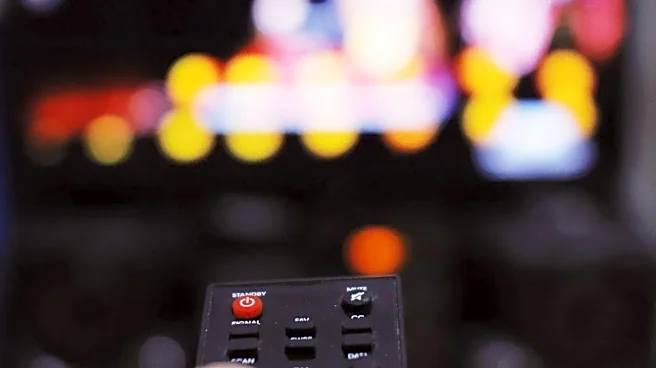
This created a powerful bond with networks like CBS, NBC, and ABC, whose prime-time lineups became a familiar, comforting presence in American homes. Research consistently shows this generation still watches far more traditional television than any other. Recent data reveals that adults over 60 watch nearly five hours of TV daily, with a strong preference for live, linear programming. For them, the 'default' is turning on the TV and navigating a guide of channels. They are the least likely generation to be distracted by other devices while watching, making them a focused, valuable audience for advertisers who still rely on the power of the 30-second spot. This behavior is rooted in a world where the TV was a piece of furniture and the remote control had a finite number of options.
The Gen Z Default: A Universe of Apps
Gen Z’s media consumption couldn’t be more different. Born into a world of infinite choice, their loyalty isn’t to a network, but to creators and algorithms. For them, the 'default screen' is a smartphone, and the 'channels' are apps like YouTube and TikTok. Recent studies highlight a dramatic shift: 43% of Gen Z now prefer watching content on YouTube and TikTok over both traditional TV and premium streaming services like Netflix. They watch less than an hour of traditional TV per day on average, and nearly 40% watch no live TV at all. Their viewing is defined by personalization and interaction. Instead of passively consuming a pre-programmed schedule, they actively curate their own feeds, follow individual creators, and engage with content through comments and shares. This creates a form of 'app loyalty,' where trust is placed in the platform's ability to serve up a never-ending stream of relevant, short-form, and often user-generated content.
The Battle for the Home Screen
This generational divide is at the heart of the media industry's current identity crisis. Legacy media companies are no longer just competing with each other; they're competing with every app on a user’s phone. The fight is no longer for the best time slot but for a permanent spot on a device's home screen. Networks have poured billions into their own streaming apps—Peacock, Paramount+, and others—in an attempt to bridge this gap. They hope to translate decades of brand recognition into app downloads and subscriptions. But the challenge is immense. While older generations have adopted streaming, with over 60% of Boomers now using streaming apps, their habits often mimic old ones, favoring free, ad-supported services that feel like channel surfing. Meanwhile, Gen Z is highly selective about paid subscriptions and far less tolerant of traditional advertising, valuing control over their viewing experience above all.
Why Fall TV Is the Flashpoint
The fall TV season, once a cultural touchstone, now serves as an annual stress test for this fractured landscape. It's the moment when legacy networks try to recapture a sense of collective, appointment viewing in an on-demand world. They roll out their biggest bets and returning franchises, hoping to create buzz that cuts through the noise of social media feeds. But even success looks different now. A 'hit' show on broadcast TV might draw a fraction of the engagement generated by a viral TikTok trend or a surprise Netflix phenomenon. The very concept of a 'season' is becoming obsolete in an environment where streaming platforms drop entire seasons at once. While the fall lineup still includes familiar procedurals and sitcoms aimed at a loyal older audience, the true battle is for relevance in a world where the remote control has been replaced by the endless scroll.