

The Hang Test: Your First Clue to Quality
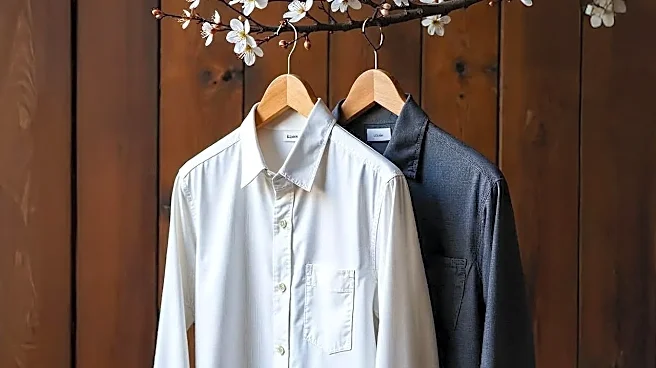
The test is simple: hold two shirts up by the shoulders, side by side. Observe how they fall. Does one create soft, fluid folds while the other hangs stiffly or looks limp? This quality, known as drape, is your first and most intuitive indicator of a garment's
construction. A shirt with a graceful drape often signals a better feel and a more flattering fit, moving with your body rather than fighting against it. But what you're seeing isn't just a random occurrence; it's the result of several deliberate choices made long before the shirt ever reached the rack.
It Starts with the Fiber's Length
The journey of a cotton shirt begins with the raw fiber, and not all cotton is the same. The crucial factor here is 'staple length'—the length of the individual cotton fibers. Cheaper, more common Upland cotton has shorter fibers. When spun into yarn, these short fibers require more twists and have more ends sticking out, which can create a slightly coarser, rougher fabric that doesn't hang as smoothly. In contrast, premium varieties like Pima and Egyptian cotton are known for their extra-long staples (ELS). These longer, smoother fibers can be spun into stronger, finer yarns with fewer exposed ends, resulting in a fabric that is inherently softer, more durable, and drapes more fluidly.
Weave and Weight Make a World of Difference
How the cotton yarns are constructed into fabric is just as important as the fibers themselves. A t-shirt is typically a jersey knit, a structure made from loops of yarn that gives it natural stretch and a soft, fluid drape. A dress shirt, however, is usually woven. A poplin weave is tight and smooth, creating a crisp, lightweight shirt that hangs cleanly. An Oxford cloth uses a basket-weave structure that is slightly heavier and more textured, resulting in a more relaxed, casual drape that softens over time. Fabric weight, measured in Grams per Square Meter (GSM), also plays a key role. A low-GSM fabric might feel thin and unsubstantial, while a very high-GSM fabric can be thick and structured. The sweet spot is a fabric with enough weight to hang gracefully without being stiff.
The Unseen Art of Cut and Finish
Finally, even the best fabric can be undone by poor manufacturing. The direction of the cut matters immensely. A garment cut on the 'bias' (diagonally across the weave) will have significantly more stretch and a more fluid, body-hugging drape than one cut on the straight grain. This is why bias-cut dresses and skirts flow so elegantly. Furthermore, finishing processes can alter a fabric's hand, or how it feels to the touch. Treatments can be applied to make a fabric feel softer, add a slight sheen, or give it a stiffer, more formal structure. These final touches, combined with the quality of the fiber and the weave, are what create the distinct personality of the finished shirt you see hanging in the store.