





The White Ribbon (2009)
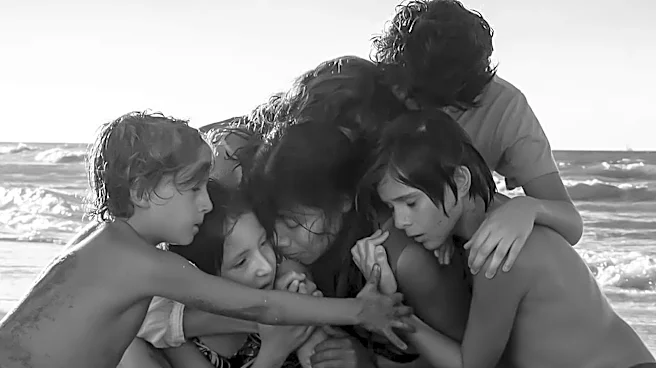
Before he made 'Amour', director Michael Haneke perfected his brand of clinical, chilling cinema with this black-and-white masterpiece. Set in a German village on the eve of World War I, the film observes a series of strange, cruel 'accidents' without
ever showing the culprits. Like 'Zone', it is a bone-chilling study of collective guilt and the roots of violence, leaving the audience to connect the terrifying dots in a community that refuses to see what's right in front of it.
Hidden (Caché) (2005)
Another Haneke classic, 'Hidden' is perhaps the ultimate film about the horror of being watched. A Parisian family begins receiving anonymous videotapes of their own home, forcing them to confront a long-buried secret. The film uses a detached, surveillance-camera style that generates immense paranoia and dread. It shares 'Zone’s' focus on how privileged lives are built on past atrocities that refuse to stay buried, creating a palpable sense of unresolved tension.
Under the Skin (2013)
From 'Zone of Interest' director Jonathan Glazer himself, this sci-fi horror film is a perfect stylistic companion piece. Following an alien entity in human form as it preys on men in Scotland, the film adopts the same cold, observational perspective. It creates a profound sense of alienation and dread through its detached visuals and unsettling sound design. It proves that Glazer's 'vibe' of seeing humanity from a chilling, emotionless distance is one of his most powerful tools.
The Killing of a Sacred Deer (2017)
If you found the Höss family’s detached interactions unsettling, Yorgos Lanthimos’s psychological thriller will feel unnervingly familiar. The film features characters who speak in a bizarre, stilted monotone as a surgeon's family is afflicted by an inexplicable curse. The horror isn't in jump scares but in the unnatural calm with which characters accept a horrifying reality. It shares 'Zone’s' sense of an inescapable, logic-defying doom playing out in a sterile, modern environment.
We Need to Talk About Kevin (2011)
This film is the domestic equivalent of 'Zone's' premise: the monster isn't over the wall, he's in the house. Tilda Swinton plays the mother of a boy who commits a horrific act, and the film flashes back through her memories as she tries to understand her own complicity. It explores the chilling 'banality of evil' within a family unit, focusing on the unsettling normalcy and maternal denial that precede an unspeakable tragedy. The dread is psychological and relentless.
The Act of Killing (2012)
Perhaps the most disturbing documentary ever made, this film directly engages with the banality of evil. Director Joshua Oppenheimer invites former Indonesian death-squad leaders to re-enact their mass killings in the style of their favorite Hollywood movies. The result is a surreal, horrifying look into the minds of unrepentant murderers who have integrated their atrocities into a story of heroism. It is a real-world 'Zone of Interest', examining perpetrators living proudly next door to their crimes.
Martha Marcy May Marlene (2011)
For a sense of creeping, persistent dread that infects every frame, look no further than this psychological thriller. Elizabeth Olsen gives a stunning debut performance as a young woman who has just escaped a cult. As she tries to readjust to life with her sister, paranoia and traumatic memories bleed into her present reality. The film masterfully blurs the lines between past and present, creating a constant, low-level terror that something is deeply and irrevocably wrong, a feeling very familiar to 'Zone' viewers.
Compliance (2012)
Based on a shocking true story, 'Compliance' is a masterclass in situational horror. A prank caller posing as a police officer convinces a fast-food manager to detain and abuse a young employee. The horror comes not from violence, but from watching ordinary people willingly follow extraordinary and cruel instructions from a disembodied voice of authority. It’s a gut-wrenching look at the fragility of morality and echoes 'Zone's' exploration of how people become complicit in horrific acts through obedience.
Good (2008)
This deeply underrated film stars Viggo Mortensen as John Halder, a 'good' and liberal-minded literature professor in 1930s Germany who finds himself slowly and incrementally co-opted by the Nazi party. It's a direct examination of the central theme in 'Zone of Interest': moral compromise. There is no single moment of evil transformation, just a series of small, logical, self-serving decisions that lead to damnation. It is a quiet, intellectual horror story about the normalization of atrocity.
Son of Saul (2015)
While set in the same location as 'Zone'—Auschwitz—'Son of Saul' offers a powerful contrast in style that highlights what makes both films brilliant. Where 'Zone' is detached and observational, 'Son of Saul' is claustrophobic and immersive, shot in tight close-up as it follows a Sonderkommando prisoner on a singular, desperate mission. The surrounding horror is blurred and out of focus, heard but not seen. It uses a different cinematic language to arrive at a similar truth about finding a sliver of humanity amid unimaginable horror.