





The Auteur's Visual Fingerprint
You know it when you see it. That perfectly symmetrical, storybook-hued frame can only be Wes Anderson. That bold, passionate, almost melodramatic splash of red? Must be Pedro Almodóvar. This instant recognition isn't an accident; it’s the modern evolution of the auteur theory, where a director’s personal vision is so distinct it acts as a signature. In an age of visual saturation, color has become the most immediate and powerful part of that signature—a calling card that announces the artist's presence. And there is no greater stage to present that card than the Cannes Film Festival, the global epicenter of cinematic prestige. Here, a strong visual identity doesn't just complement a film; it defines it, making it instantly memorable and, crucially,
marketable.
Wes Anderson’s Curated Nostalgia
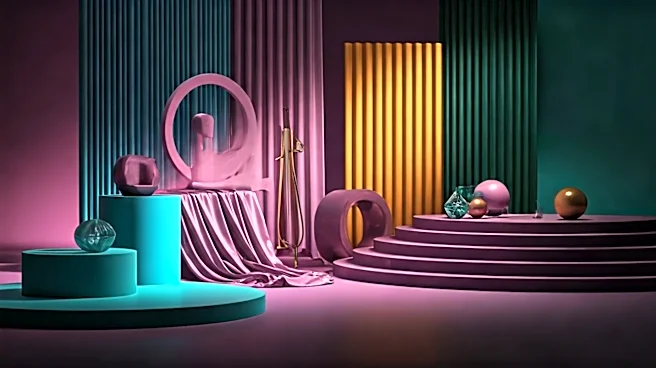
Let’s start with the king of the curated palette. Wes Anderson’s films, from The Grand Budapest Hotel to Asteroid City (a recent Cannes premiere), are famous for their diorama-like worlds painted in deliberate, often desaturated, shades. His use of dusty pinks, mustard yellows, and powder blues creates a feeling of stepping into a vintage postcard or a meticulously organized dollhouse. The color isn't just decorative; it's narrative. It evokes a specific, bittersweet nostalgia for a past that never quite existed. At Cannes, where cinematic artistry is dissected with academic rigor, Anderson’s unwavering commitment to his aesthetic is celebrated as the ultimate expression of directorial control. His palette is his brand, as recognizable as the Nike swoosh or the Coca-Cola script.
Pedro Almodóvar’s Saturated Passions
If Anderson’s colors are a polite, witty whisper, Pedro Almodóvar’s are a passionate, operatic cry. The Spanish master, a longtime Cannes favorite, uses color to dial his characters' emotions up to eleven. His world is drenched in bold, primary hues, with a particular obsession with red. For Almodóvar, red is never just red. It’s desire, danger, blood, love, and political fervor, all at once. In films like Pain and Glory or All About My Mother, a red dress, a red phone, or a red wall isn't just set dressing; it’s a key character in the melodrama. His palettes are as fiery and complex as the women who lead his films, turning the screen into a canvas of heightened reality that feels more emotionally true than life itself.
Nicolas Winding Refn’s Neon-Noir
Then there’s the dark side of the spectrum. When Nicolas Winding Refn’s Drive premiered at Cannes in 2011, it didn't just win him Best Director; it unleashed a new aesthetic into the mainstream: neon-noir. Refn trades in storybook pastels and passionate primaries for the electric blues, hot pinks, and sickly greens of late-night cityscapes. His color palette is the visual equivalent of a throbbing synth score. It’s cool, detached, and menacing. In films like Drive and the even more stylized The Neon Demon, color creates a hypnotic, dreamlike state that often veers into a nightmare. This isn’t the color of emotion; it’s the color of mood—a slick, hyper-violent, and dangerously seductive vibe that has been endlessly imitated but rarely duplicated.
Art, Brand, and Festival Buzz
Ultimately, the rise of the auteur color palette is a perfect storm of art, commerce, and technology. A distinctive look makes a film pop, not just on the big screen at the Palais des Festivals, but in the palm-sized screens of Instagram and TikTok, where a single, beautifully colored still can go viral. For a festival programmer trying to curate a lineup and for a distributor trying to sell a film, a director with a built-in visual brand is a massive asset. The palette becomes a shorthand for the film's tone and a promise to the audience. It tells them what kind of experience they’re in for, turning a director’s artistic choice into one of the most effective marketing tools in modern cinema.