





The Hero Problem
On paper, Odysseus seems like a modern protagonist. He’s resourceful, intelligent, and driven by a clear goal: return to his wife and kingdom. But the man on the page is far more complicated and, to modern sensibilities, often unheroic. A Greek hero isn't
necessarily a good guy; he's just larger than life. Odysseus is a serial liar, a war criminal, and his arrogance is directly responsible for many of his own hardships, such as when he taunts the Cyclops and earns the wrath of Poseidon. He’s not a flawed hero who learns to be better in a way that satisfies a conventional character arc. He is a 'complicated' man, whose defining trait is a morally ambiguous cunning. Hollywood screenplay structure is built around protagonists we root for as they change and grow. Odysseus often remains a static, morally gray figure whose heroism is defined by a different, ancient code. This makes him a tough sell for audiences accustomed to more clear-cut heroes.
The Structure Problem
Modern screenplays live and die by the three-act structure: setup, confrontation, and resolution. An epic poem, designed for oral performance, follows a different rhythm entirely. The Odyssey doesn’t start at the beginning of the journey; it starts in the middle, then uses lengthy flashbacks to fill in the gaps. The narrative is episodic, moving from one famous set piece—the Sirens, Circe, the land of the dead—to the next. This structure creates a sprawling, non-linear travelogue, not the tight, cause-and-effect narrative that blockbuster films demand. Condensing thousands of lines of poetry and a decade of wandering into a two-hour film forces screenwriters to make brutal cuts, often losing the thematic and narrative richness that makes the poem so enduring. The story wasn't designed for the constraints of modern cinematic storytelling; its power comes from its vast, meandering scope.
The God Problem
In Homer's world, gods are not distant, abstract beings. They are active, meddling characters with their own motivations and biases. Athena loves Odysseus, while Poseidon actively works to destroy him. This divine intervention is central to the plot and themes of the epic, illustrating a cosmos where human lives are intertwined with godly whims. For a modern film audience, this presents a major hurdle. Portraying gods directly can feel clumsy or campy, turning a profound exploration of fate into what looks like a fantasy B-movie. But removing them guts the story of its core logic. The narrative wasn't just entertainment; it was a way for ancient Greeks to understand their world and the forces that governed it. Translating that worldview for a secular, modern audience without it feeling silly is one of the trickiest parts of any adaptation.
The 'O Brother' Solution
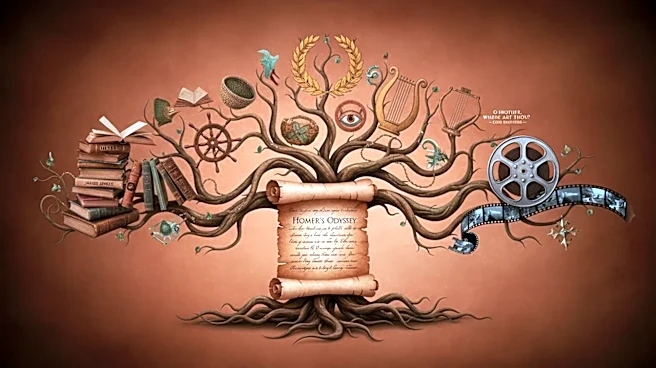
Perhaps the most successful adaptation of The Odyssey is the one that barely tries to adapt it at all: the Coen Brothers' O Brother, Where Art Thou?. The film's credits cheekily state it's based on the epic, and the parallels are clear: Ulysses Everett McGill is a fast-talking hero on a long journey home to his wife, Penny. He encounters a one-eyed giant (John Goodman's Big Dan Teague), enchanting Sirens, and a blind seer. By transposing the story to the Great Depression-era American South, the Coens were free to borrow the motifs and themes without being chained to the literal plot. They captured the spirit—the episodic journey, the morally flexible hero, the sense of a world governed by strange forces—without getting bogged down in faithfully recreating ancient Greece. This approach suggests the best way to adapt The Odyssey may be to not adapt it directly, but to retell its timeless story of homecoming in a new context.