


The Big Reveal: The Crane Shot
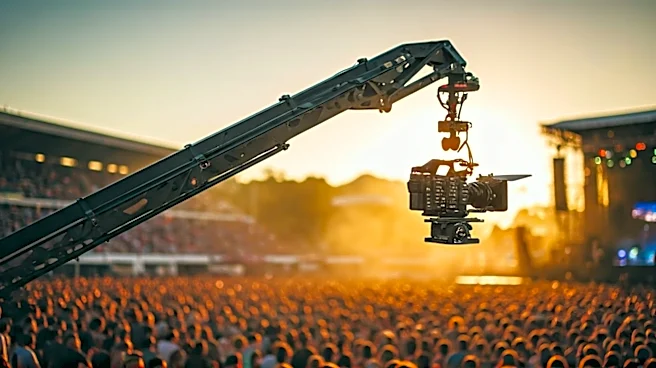
The single most impactful production choice is the use of a camera crane, also known as a jib. Forget shaky handheld footage or static tripod shots. The crane is a long, weighted arm with a camera on one end and a counterweight and controls on the other.
It allows an operator to swoop the camera smoothly through three-dimensional space, creating elegant, floating shots that are impossible to achieve by any other means. When you see a camera seamlessly rise from a close-up of a DJ’s hands to a sweeping vista of a 50,000-person crowd, that’s the crane at work. It’s the visual language of cinema, applied to a live event. Drones can capture high-angle shots, and Steadicams can follow artists on stage, but only the crane can deliver that flawlessly smooth, multi-axis movement that glides over heads, around pyrotechnics, and up into the sky in one unbroken, majestic motion. This movement instantly signals high production value—it feels expensive because, well, it is.
The Psychology of Smooth Movement
So why does this one technique have such a profound psychological impact on the viewer? It’s all about perspective and control. A crane shot detaches the viewer from the chaos of the crowd, giving them a privileged, almost god-like point of view. The movement is fluid and deliberate, not frantic. This creates a sense of grandeur and authority. It feels curated and intentional, turning a messy, real-world event into a polished, cinematic experience.
This fluid motion also creates a visual effect called parallax, where objects in the foreground move faster than objects in the background. As the camera sweeps across the stage and over the crowd, this effect adds a deep sense of dimension and scale. The stage lights, the artist, the front row, and the distant sea of people all move at different rates, tricking our brains into perceiving a vast, immersive space. A static shot makes you an observer; a crane shot makes you a participant in the spectacle.
Capturing the Artist-Audience Connection
A festival isn’t just about the person on stage; it’s about the collective energy of the crowd. The crane shot is the ultimate tool for visually stitching these two elements together. A director can start with a tight shot on a singer’s face, capturing their raw emotion, and then pull back and up in a single, continuous take to reveal the thousands of fans singing along, their faces illuminated by the stage lights.
This shot does more narrative work than a dozen quick cuts ever could. It says, “This one person is moving all of these people.” It contextualizes the performance, making the artist seem larger than life while simultaneously validating the experience of every single person in the audience. It’s the shot that creates the iconic “moment” — the one that will be used in every promotional video for the next year. It transforms a concert into a historic event.
More Than Just a Camera on a Stick
While the effect is elegant, the logistics are anything but. A professional camera crane is a complex piece of machinery that requires a dedicated, skilled team to assemble, balance, and operate. You need a large, stable footprint to set it up, often in the middle of a packed festival ground or in a dedicated media pit. The operator has to navigate the arm with precision, coordinating with the camera puller who manages focus and the director who is calling the shots.
This logistical and financial investment is precisely why it reads as “expensive.” Smaller productions, local concerts, or indie festivals often can’t justify the cost or space for a 30-foot jib. Its presence is a statement. It tells the viewer that the organizers invested heavily in capturing the event in the most dynamic way possible, elevating the final product from a simple recording to a piece of polished entertainment.