


The Era of Empty Nostalgia
For the last decade, the television industry’s approach to intellectual property has felt a lot like a sugar rush. The formula was simple: find a beloved show from the 80s or 90s, reunite a few original cast members, and re-create the magic. The problem,
as viewers quickly discovered, is that magic is hard to bottle twice. More often than not, these reboots were hollow echoes of their predecessors. They were either painstakingly faithful remakes that felt creatively bankrupt or awkward updates that missed the original's spirit entirely. The result was a wave of programming that seemed designed more for a press release than for an actual audience, banking on a familiar title to cut through the streaming clutter, only to disappoint the very fans it was meant to attract. This cycle of hype and letdown created a deep-seated skepticism toward any project with the word “reboot” attached.
The New Playbook: Reboot the Premise, Not the Plot
So, what’s different about the fall 2026 slate? In short, the strategy has evolved from replication to reinvention. Instead of bringing back the same characters and storylines, savvy creators are rebooting a show's core premise. They are treating the original series not as a sacred text to be copied, but as a brilliant concept that can serve as a launchpad for a completely new story. This approach liberates a new show from the impossible task of recreating a classic's specific chemistry. Instead, it asks a more interesting question: What made the original idea so compelling, and how can that idea be explored in a new time, with a new tone, or even in a completely different genre? It’s a move that values the spirit of the original over its literal plot points, creating what could be called a “spiritual successor” rather than a direct remake.
Case Study: From Sci-Fi Epic to Workplace Comedy
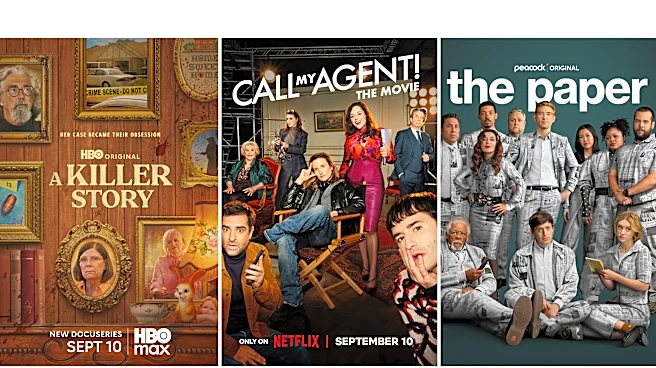
Look at a show like Peacock’s “The Paper,” which exists in the same universe as “The Office.” It doesn't try to bring back Michael Scott or remake Dunder Mifflin. Instead, it reboots the premise: a mockumentary about a mundane workplace populated by quirky characters. By shifting the setting to a struggling local newspaper, the show finds a fresh source of anxiety and humor that feels uniquely current, while still delivering the cringe-comedy DNA that fans loved. This is the strategy in action. It uses the brand recognition and proven format of a classic as a foundation to build something new, attracting old fans with a familiar feeling while giving new viewers their own cast of characters to embrace.
Case Study: Prequels That Deepen the Lore
Another flavor of this new strategy is the high-concept prequel that re-contextualizes a familiar story. Take Peacock’s “Crystal Lake,” a prequel to the “Friday the 13th” horror franchise. Instead of another movie about a masked killer stalking teens, the series rewinds to explore the life of Pamela Voorhees, Jason’s mother. This isn’t a reboot in the traditional sense; it’s an expansion. It takes a piece of established lore and uses it to tell a different kind of story—in this case, what seems to be a psychological maternal horror drama. Similarly, Prime Video's highly anticipated 'Blade Runner 2099' aims to continue the world-building of the films without simply remaking the original story. This method honors the source material by adding depth and texture, turning a one-note villain or a futuristic world into a richer, more complex narrative universe.
Will This Finally Win Over the Skeptics?
No strategy is foolproof, and lazy executions will always exist. But this shift toward premise-driven reinvention is the most promising development in franchise television in years. By refusing to be trapped by the past, these new shows offer a compelling bargain to weary audiences. They provide the comfort of a familiar concept without the baggage of direct comparison. The approach allows creators to be genuinely creative, using the original IP as a creative prompt rather than a restrictive blueprint. It's a tacit admission that you can't go home again—but you can build a fascinating new house on the same foundation. For the first time in a long time, the fall television schedule offers reboots that aren't just for die-hard fans but are also compelling, original-ish stories in their own right. And that’s a reason for even the biggest skeptic to consider tuning in.