




First, What Is Runway Cohesion?
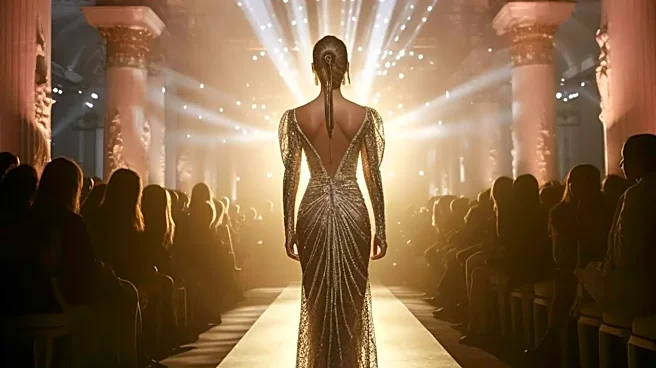
In fashion, cohesion is the magic that happens when every element of a show works together to tell a single, powerful story. It's not just about clothes that look good; it's about creating a world. The music, the set, the lighting, and, crucially, the beauty
all serve one narrative vision. When it comes to hair and makeup, cohesion means the look isn't just an accessory—it's a vital part of the character the designer is trying to portray. The most memorable runway beauty doesn't just complement the clothes; it completes the thought. It’s the difference between a pretty face and a full-blown narrative that walks down the runway, making the entire presentation feel intentional, immersive, and impossible to forget.
Case Study: The Theatricality of Galliano's Dior
No one understood the power of a complete narrative quite like John Galliano during his tenure at Dior, especially with makeup artist Pat McGrath by his side. Their collaborations were legendary for their theatricality. For Dior's Spring 2007 Haute Couture show, inspired by Puccini's opera Madama Butterfly, the beauty was anything but subtle. McGrath created a modern interpretation of Japanese-inspired makeup, with dramatic, architectural blocks of color on the eyes and exquisitely painted lips. The looks were not merely makeup; they were extensions of the garments' origami-like folds and rich fabrics. This wasn't about making models look pretty in the conventional sense. It was about transforming them into characters from Galliano's opulent, tragic fantasy, proving that when makeup is this committed to the theme, it becomes as important as the clothes themselves.
Case Study: The Otherworldly Forms of McQueen
Alexander McQueen's shows were famous for their dark, often confrontational storytelling, and the hair and makeup were central to building his unsettling worlds. For his final fully realized collection, Spring/Summer 2010's "Plato's Atlantis," McQueen envisioned a future where humanity had evolved to live underwater. To bring this to life, hairstylist Guido Palau crafted incredible, sculptural hair formations that resembled fins or alien cranial structures. The makeup, by Peter Philips, involved prosthetics to alter the models' facial structures, giving them high, otherworldly cheekbones and brows blocked out to complete the inhuman effect. The look wasn't an afterthought; it was the biological conclusion of the collection's theme. It remains a masterclass in how beauty can be used to build a cohesive, fantastical world that is both savage and beautiful.
The Powerful Lesson of Restraint
Cohesion doesn't always have to scream. Sometimes, the most powerful statement is a quiet one. The '90s minimalism championed by Calvin Klein is a perfect example. In an era reacting against '80s excess, Klein's runway shows presented a radically stripped-back vision. The beauty, often crafted by makeup artists like Dick Page, was intentionally restrained: clean, dewy skin, minimal-to-no mascara, and neutral, toned-down lips. For shows like the brand's iconic Fall 1993 collection, the models looked fresh-faced, as if wearing little more than moisturizer. This wasn't about laziness; it was a deliberate choice that reinforced the clothes' focus on clean lines, simple silhouettes, and unadorned luxury. The "no-makeup makeup" look wasn't just a trend; it was the philosophical soulmate of the collection, proving that perfect cohesion can be found in what you choose to leave out.