





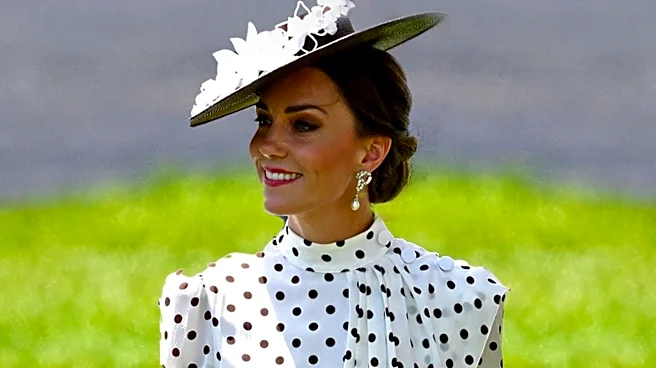


More Than Just a Dress Code
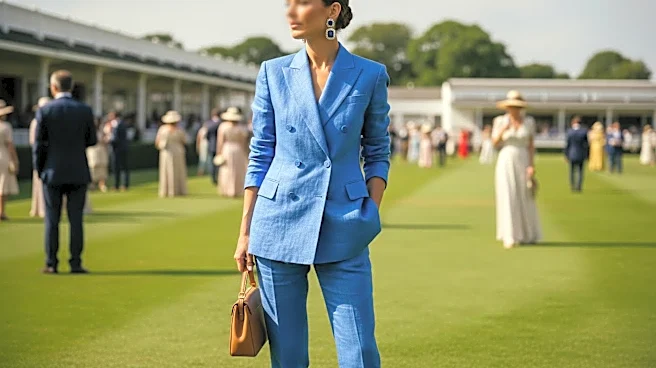
The official protocol for Wimbledon's Royal Box is deceptively simple: men in suits or jackets and ties, and ladies in smart daywear, with a polite request to avoid hats that might block views. This has been the standard since the box was established
in 1922. But beneath these written rules lies a complex tapestry of unwritten expectations. It’s not just about adhering to a code; it’s about navigating a social minefield where tradition, status, and personal style collide. The guest list is a curated mix of royalty, heads of government, military figures, and cultural icons, all expected to uphold a certain British decorum. This unique environment turns clothing into a powerful statement, whether the wearer intends it or not.
The Boomer Gaze: Respect Through Formality
For the generation that grew up with a clearer set of social hierarchies and dress codes, the Royal Box is a bastion of decorum. From this perspective, dressing for the occasion is a fundamental sign of respect—for the institution, the players, and the royal patrons. A well-tailored suit or a modest, elegant dress isn't just an outfit; it’s a nod to the timeless nature of the event. Think of Princess Diana's classic skirt suits in the '90s. This viewpoint prioritizes subtlety and quality, where the goal is to look appropriate and polished, not to stand out. An outfit that deviates too far from the norm might be seen as a misstep or, worse, a sign of disrespect, as when Formula One driver Lewis Hamilton was reportedly denied entry in 2015 due to a misunderstanding over the dress code.
The Millennial and Gen X Edit: Polished with Personality
Those in their late 30s to early 50s often approach the Royal Box with a desire to blend tradition with a modern twist. They appreciate the heritage but believe personal style doesn't have to be sacrificed. This is the generation of the carefully chosen statement piece—a brightly colored dress, a designer handbag, or a slightly unconventional silhouette that still reads as smart and put-together. Consider the Duchess of Sussex and the Princess of Wales, who have often been watched for how they interpret the rules, mixing high-end designers with their personal tastes. For this group, the ideal is to look like you understand the rules but are confident enough to interpret them, proving that formality doesn't have to mean uniformity.
The Gen Z Interpretation: Authenticity Over Everything
For the youngest generation of adults, formal dress codes can feel like an outdated performance. Having grown up online, where personal identity and self-expression are paramount, Gen Z is more likely to question the very premise of rigid sartorial rules. From their perspective, wearing a stuffy suit might feel inauthentic. They might be more impressed by a celebrity who wears a look from a sustainable, independent designer than one in a traditional luxury brand. Their lens values comfort, individuality, and a rejection of arbitrary rules. While they may not be the primary occupants of the Royal Box just yet, their viewpoint is already influencing the conversation, asking whether true respect lies in conforming to a dress code or in showing up as your authentic self.