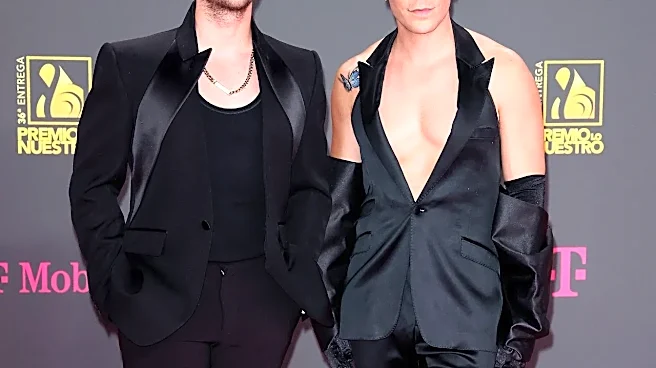










The Latin Grammy for Best New Artist is more than an award; it’s a snapshot of the future. This year, the nominees reflect a vibrant, diverse, and rapidly evolving industry, showcasing everything from viral folk to dreamy indie pop.
Macario Martínez: The Working-Class Folk Hero
Macario Martínez has
one of the most compelling origin stories in recent memory. The former Mexico City street sweeper became a viral sensation in 2025 after a TikTok video of his song 'Sueña lindo, corazón' captured the hearts of millions. But his nomination is no fluke. Martínez backs up the fairy tale with a sound that fuses traditional huapango and folk with alternative rock, creating a style that feels both timeless and distinctly modern. Before his viral fame, he was already an independent artist with a critically acclaimed album and EP. His journey from a city worker to playing major festivals like Vive Latino and collaborating with artists like Eslabón Armado proves his powerful resonance and staying power, making him a potent symbol of grassroots talent in the digital age.
maye: The Bilingual Dream Pop Auteur
Venezuelan-American singer-songwriter maye represents a different, but equally powerful, path to stardom. Based in Miami, she crafts a sound that floats between indie rock, dream pop, and bolero, often switching seamlessly between English and Spanish. Her career received a major boost when her song 'Tú' landed on Barack Obama's 2020 summer playlist, but she has since built a dedicated following with her debut album 'Música Para Abrir El Cielo' and consistent releases. The daughter of a Latin Grammy-winning songwriter, maye’s musicianship is in her blood, but her perspective is entirely her own, blending sultry vocals with a contemporary, Gen Z sensibility that has made her a fixture in the indie and Latin pop scenes.
ARIA VEGA: The Data-Driven Pop Powerhouse
If there's a numbers-backed favorite, it's ARIA VEGA. The Colombian pop singer has demonstrated massive audience engagement, leading the nominee field in Spotify monthly listeners and YouTube views. Her momentum began with the viral hit 'CHÉVERE,' which was amplified by a remix featuring Ryan Castro. VEGA embodies the modern, multi-platform artist, leveraging social media and streaming into a formidable public profile. While the Latin Grammys are decided by Academy voters, not just metrics, her undeniable commercial impact and fan base make her a leading contender who represents the new face of mainstream Latin pop.
Arath Herce: The Genre-Bending Multi-Nominee
Arath Herce stands out not just in the Best New Artist category but across the entire 2026 nominations list, tying with a total of four nods. This level of recognition from the Academy signals a deep respect for his craft. Herce’s appeal lies in his ability to blur genre lines, a quality that is increasingly valued in today's music landscape. An artist who can secure nominations in multiple categories often demonstrates a versatility and musical depth that makes them a strong candidate for Best New Artist, an award that celebrates performers who establish a unique and lasting identity.
The Rest of the Diverse Field
The category is rounded out by a slate of artists who highlight the sheer breadth of Ibero-American music. The 11 total nominees include Brazilian singers Loulu Gilberto and Zeca Veloso, Mexican artists Sofia Monroy and Kendall Peña, and Spanish singer Dora Sanches, among others. Each brings a distinct flavor to the competition. From the neotropical sounds of FABIAN to the alternative stylings of Delilah, the 2026 class is a testament to the Academy's expanded view of what a 'new artist' can be, reflecting a musical world without creative borders.