






The Lion in Winter
By the mid-1960s, Metro-Goldwyn-Mayer, the once-mighty studio boasting "more stars than there are in heaven," was in serious trouble. The old Hollywood system was crumbling. Television was keeping audiences at home, and a series of expensive, epic flops
had left the studio bleeding money. After the massive success of Ben-Hur in 1959, MGM doubled down on historical epics, but follow-ups like Mutiny on the Bounty (1962) were disastrous financial failures. The studio that gave the world The Wizard of Oz and Gone with the Wind was facing a potential collapse, losing money for the first time in its history in 1957 and struggling to find its footing in a new era.
A Visionary's Blank Check
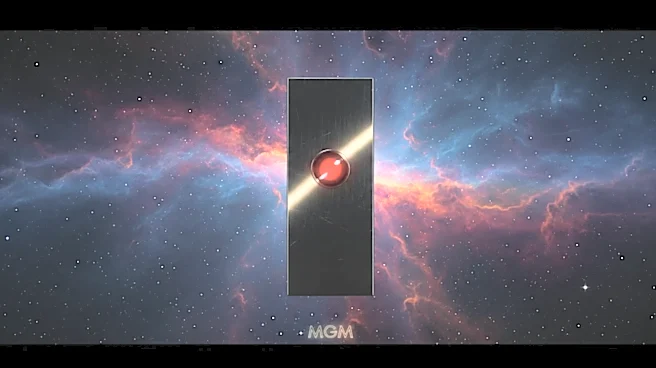
In this climate of fear, MGM President Robert O'Brien made a bold decision. He decided to bet on Stanley Kubrick. Kubrick, already acclaimed for Dr. Strangelove, approached MGM with an ambitious idea for a sprawling sci-fi film co-written with Arthur C. Clarke. MGM had prior success with Kubrick on Lolita and was keen to work with Clarke. They gave the notoriously meticulous director what amounted to a blank check and unprecedented creative control. The initial budget was set at $6 million, a staggering figure at the time, for a film tentatively titled Journey Beyond the Stars. It was a high-risk bet on a filmmaker known for his uncompromising vision, not for bringing projects in on time or under budget.
An Epic, Expensive Production
Production began in 1965 and quickly ballooned into a four-year marathon. The budget swelled from the initial $6 million to somewhere between $10.5 and $12 million—an astronomical sum for the time. Kubrick obsessed over every detail, pioneering revolutionary special effects that still hold up today. He famously ordered that all effects be created "in camera" to avoid the degraded quality of common techniques, a painstaking process that added immense time and cost. Back at MGM headquarters, executives grew increasingly nervous. They were sinking a fortune into a cryptic, dialogue-light film about evolution, artificial intelligence, and rebirth, with no guarantee that audiences would understand it, let alone embrace it.
From 'Boring' to Blockbuster
When 2001: A Space Odyssey premiered in April 1968, the studio's fears seemed justified. The initial critical reaction was polarizing, with many reviewers finding it slow and baffling. At one early screening, hundreds of people, including actor Rock Hudson, walked out in confusion. But then, something unexpected happened. The film found its audience not with traditional moviegoers, but with the 1960s counter-culture. Young people, drawn to the film's visual splendor and philosophical questions, turned it into a cultural event. MGM, sensing a shift, pivoted its marketing, rebranding the film with the tagline, "The Ultimate Trip." The gamble paid off. The film became a massive box office success, grossing nearly $72 million worldwide in its initial run on a $12 million budget.
A Crucial, If Temporary, Reprieve
So, did it single-handedly save MGM? The answer is complex. The massive profits from 2001 provided a desperately needed cash infusion, staving off immediate financial disaster. Along with another 1960s hit, Doctor Zhivago, it kept the studio afloat. However, the systemic problems at MGM were too deep to be solved by one film. In 1969, a year after 2001's release, investor Kirk Kerkorian bought the struggling studio. While he would go on to strip many of its assets, the success of 2001 undoubtedly made MGM a more viable acquisition and prevented an outright collapse in the late 60s. The film provided a critical lifeline, proving that even in a corporate-driven industry, a singular artistic vision could still deliver a commercial miracle.