







The Survivor's Burden
Unlike her famous cousin, Supergirl isn't a baby sent to a new world. She’s a teenager who remembers everything she lost. She watched Krypton die. She remembers her parents, her friends, her culture. Superman’s story is about an immigrant who assimilates
and finds his identity on Earth, grounded by the Kents. Kara’s story is about a refugee haunted by a perfect past, trying to find a reason to belong in an imperfect present. This fundamental difference makes her supporting cast non-negotiable. They aren't just there to provide backup or be rescued; they are her anchor. They are the family she chooses, the connections that prevent her from being crushed by the weight of being the sole survivor of a dead civilization. Without a rich, emotionally resonant group of friends and allies, she’s just a collection of powers defined by tragedy.
The Lesson from the Arrowverse
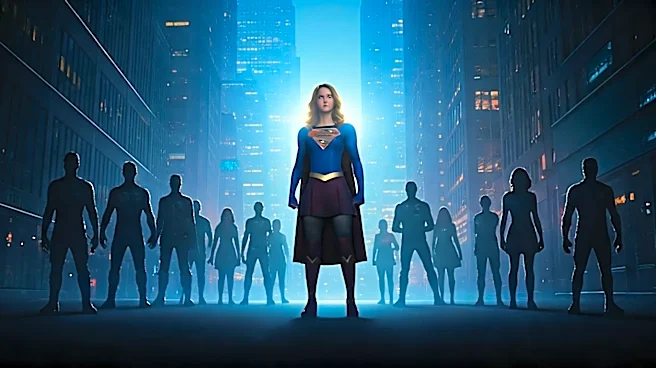
For all its ups and downs, The CW’s *Supergirl* understood this concept perfectly. The show’s beating heart wasn’t a Kryptonian crystal or a fight with a supervillain; it was the relationship between Kara and her adoptive sister, Alex Danvers. Their bond grounded the entire series. Alex wasn’t a sidekick in the traditional sense. She was Kara’s equal, her confidante, her protector, and often, her moral compass. The “Superfriends”—J’onn J’onzz, Brainiac 5, Nia Nal—were more than just an ad-hoc Justice League. They were a found family, a messy, complicated, and deeply loyal unit that gave Kara’s heroism purpose. When the show was at its best, it was because it prioritized these relationships. It proved that audiences will connect more deeply with a hero who has people to lose, people to fight for beyond a vague sense of duty to humanity.
The 'Woman of Tomorrow' Blueprint
The upcoming film is based on Tom King and Bilquis Evely’s brilliant comic series, *Supergirl: Woman of Tomorrow*. Anyone who has read it knows it’s not really a solo story. It’s a two-hander, a cosmic western told from the perspective of Ruthye, a young alien girl who hires Supergirl to help her hunt down her father’s killer. Their relationship is the engine of the entire narrative. Supergirl’s cynicism and weariness are challenged by Ruthye’s righteous fury and innocence. It is through protecting and mentoring this girl that Kara rediscovers her own hope. To adapt this story while reducing Ruthye to a mere plot device would be a profound misunderstanding of the source material. James Gunn has praised the comic for its unique take; that take is inseparable from the dynamic between its two lead characters.
Avoiding the ‘Franchise Furniture’ Trap
So, what is “franchise furniture”? It’s the love interest who appears for two scenes per movie to remind the hero he has a personal life. It’s the witty tech support who exists only to deliver exposition. It’s the childhood friend who gets a five-minute cameo to establish backstory before disappearing. These characters don’t have arcs; they have functions. They are set dressing for the hero’s journey, not active participants in it. The Marvel Cinematic Universe has, at times, been guilty of this, sidelining fascinating characters like Jane Foster or Hope van Dyne for entire phases. For Supergirl to feel like a fully realized person, her world needs to feel lived-in. Her friends and allies need their own desires, flaws, and stories that intersect with hers. They must challenge her, support her, and sometimes, even disappoint her. They need to be people, not props.