

The Polished Sound of the Airwaves
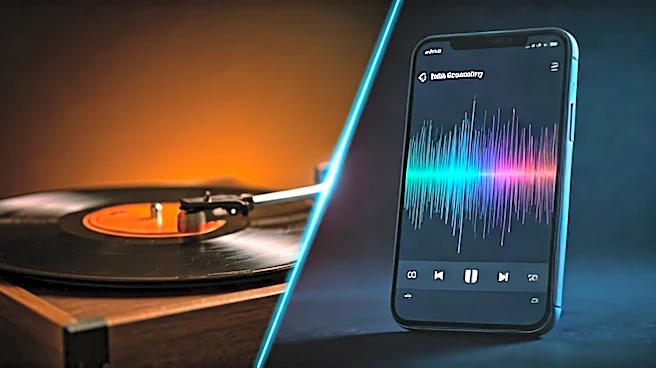
For decades, the path to country stardom was a straight, well-guarded road. You got a record deal in Nashville, worked with Music Row producers to polish your sound, and then your label’s promotion team fought to get your song on terrestrial radio. This
is the world of “Radio Country.” It’s characterized by slick production, relatable (if sometimes generic) lyrics about love, loss, and small-town life, and choruses built to be sung by a stadium of 50,000 people. Think of the reliable hitmakers who have long dominated the CMA Fest main stage at Nissan Stadium: Luke Bryan, Jason Aldean, and Carrie Underwood. Their success is built on the airwaves, a system where program directors act as gatekeepers, curating a sound that’s broadly appealing and advertiser-friendly. For these artists, a No. 1 on the Billboard Country Airplay chart is the ultimate prize, a confirmation that they’ve conquered the traditional system.
The Raw Power of the Algorithm
Then there’s the other side of the street, both literally and figuratively. This is “Streaming Country,” a world forged not in boardrooms but on iPhone screens. Its patron saint is Zach Bryan, a Navy veteran who started posting raw, acoustic videos on YouTube and Twitter. His songs weren’t focus-grouped; they were deeply personal, lyrically dense, and often emotionally ragged. He built a massive, fervent fanbase with zero radio support, proving that an audience could be cultivated directly through platforms like Spotify, Apple Music, and, most powerfully, TikTok. This new path is walked by artists like Bailey Zimmerman, whose gravelly voice first went viral on TikTok, and Oliver Anthony, whose out-of-nowhere hit “Rich Men North of Richmond” became a cultural flashpoint entirely through online distribution. Streaming Country often sounds different—it’s more acoustic, more folk-influenced, and more willing to tackle uncomfortable topics—because it doesn’t have to pass the radio-friendly test.
The Collision on Broadway
Nowhere is this collision more apparent than at CMA Fest. While the stadium shows are still packed with radio’s biggest names, the real energy often feels like it's happening elsewhere. You’ll see a massive line snaking around a small club for an unannounced pop-up show by a streaming darling who has billions of plays but has never cracked the top 40 on the radio. The official lineup represents the Nashville establishment, but the buzz on the street, in the honky-tonks, and across social media is increasingly driven by the digital upstarts. The most interesting figures in this new landscape are the ones who bridge the gap. Look at Jelly Roll or Lainey Wilson. Both have the raw, authentic storytelling of the streaming world, but they’ve also learned to play the radio game, creating hits that feel both fresh and familiar. They are the living embodiment of this transition, proving that the two paths to stardom are beginning to merge.
Redefining a Country Hit
This isn’t a battle where one side will simply vanquish the other. Instead, it’s a fundamental shift in what it means to be a country star. Radio is still powerful, especially for reaching an older, more traditional demographic. A radio hit can still make a career. But it's no longer the only game in town. The gatekeepers have lost their monopoly. A viral TikTok sound or a coveted spot on Spotify’s influential “Hot Country” playlist can now provide the same career-launching momentum that a radio station once did. Labels are scrambling to adapt, signing artists who already have a built-in online following rather than trying to build one from scratch. Success is no longer measured solely by chart position; it’s measured in streams, ticket sales, and social media engagement. The new Nashville hustle is about mastering both worlds.