



The Concert That Broke the Rules
On the night of January 16, 1938, the unthinkable happened: a jazz band took the stage at Carnegie Hall. At the time, Carnegie was the hallowed ground of classical music, and jazz was the stuff of smoky clubs and dance halls. The idea of putting a swing
band in that prestigious venue was audacious, even for a star as big as Benny Goodman, the "King of Swing." Goodman himself was initially hesitant, fearing that “hot jazz” would fall flat with a classical audience. But his publicist, Wynn Nathanson, saw a brilliant opportunity. The concert was a smash success, a cultural moment where jazz wasn't just for dancing anymore; it was music to be listened to, to be revered. It was also a landmark for racial integration, as Goodman featured Black musicians like Teddy Wilson, Lionel Hampton, and members of Count Basie's and Duke Ellington's bands on stage with his primarily white orchestra.
A Private Recording, Not a Public Release
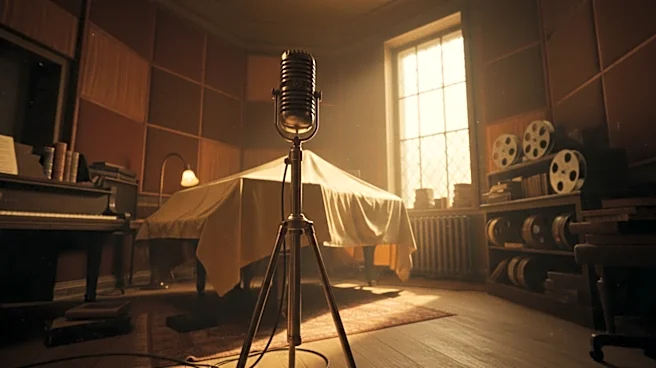
As historic as the night was, no record label planned to release it. In the 1930s, the music industry revolved around pristine, three-minute studio singles. Live recordings were practically nonexistent, considered technically inferior and commercially unviable. The only reason the concert was recorded at all was as a personal favor. A friend of Goodman's, Albert Marx, wanted a copy for himself and another as a gift for Benny. Using a single microphone hanging from the ceiling and relayed over phone lines to a nearby studio, they captured the entire show on acetate discs—a private souvenir of a special night. For Benny Goodman and the industry at large, that was supposed to be the end of it. The concert was a memory, and the records were a keepsake, not a product.
Lost, Found, and Still Rejected
For the next 12 years, the acetates of that legendary night sat forgotten in a closet in Benny Goodman's apartment. They were rediscovered in 1950, reportedly by his sister-in-law or one of his daughters. By this time, Goodman's career was in a bit of a lull, and the swing era he had ruled was fading. The discovery of these recordings from his peak felt like a godsend. However, when Goodman took the masters to Columbia Records, executives were skeptical. The recordings were over a decade old, which was an eternity in popular music. Furthermore, they were live, complete with audience noise and less-than-perfect fidelity from the primitive recording setup. In an era before live albums were a proven commodity, the idea of releasing a pricey double-LP set of a 12-year-old concert seemed like a surefire way to lose money.
The Unlikely Bestseller
Fortunately, a young Columbia producer named George Avakian championed the project. He saw the historical importance and raw energy captured on the discs and convinced the label to take a gamble. In 1950, Columbia released Benny Goodman at Carnegie Hall, 1938. To everyone's astonishment, the album was a colossal success. It became one of the first live albums to sell over a million copies, a feat unheard of for a jazz record, let alone a double-LP. It didn't just sell; it created a new market. The album's success proved that audiences were hungry for authenticity and the spontaneous energy of a live performance. It single-handedly legitimized the live album as a commercial format and reintroduced a whole new generation to the magic of the swing era.