





From Relic to Reject
When we first meet Richie (Ebon Moss-Bachrach), his clothing screams of a past he refuses to let go. He’s a man preserved in the amber of 1990s Chicago, clad in worn-out Adidas, Members Only jackets, and a rotating collection of local-centric tees. His
style is his identity: loud, resistant to change, and clinging to the glory days of the old Beef restaurant. When Carmy arrives to transform the sandwich shop into a fine-dining establishment, Richie’s uniform—a blue tee and apron—is something he wears with visible contempt. It’s a costume he’s forced into, representing a future he doesn’t believe he has a place in. He is, by his own admission, a man without a purpose, and his clothes reflect that lack of direction, a jumble of nostalgia and resentment.
The Humbling of the 'Cousin'
Richie’s journey hits its nadir early in season two, where his feeling of uselessness is palpable. Carmy, in a move that feels like both punishment and a desperate plea, sends him to “stage” at a three-Michelin-star restaurant. Here, Richie’s street style clashes violently with the temple of haute cuisine. He’s a walking anachronism, polishing endless forks in his casual gear. But something shifts. He witnesses the profound respect and dedication of the staff, not as a performance, but as a genuine calling. It’s an environment where every detail matters, a philosophy that begins to seep into his hardened exterior. The experience is designed to humble him, and it works, preparing the ground for the most significant costume change on television.
The Armor of a Suit
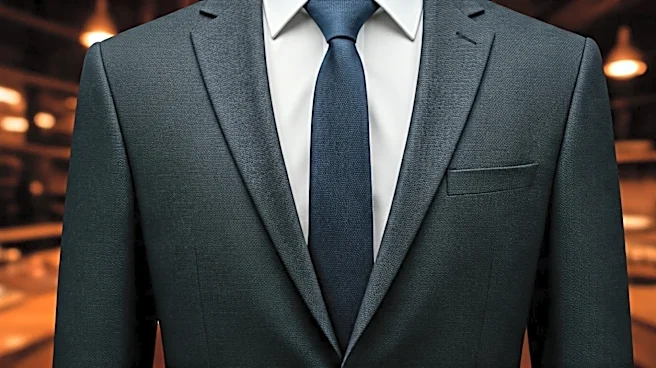
The turning point arrives with two words: “Wear suits.” After trailing a server, Richie is fitted for a suit jacket to work the floor. It's a borrowed piece, but in it, he feels something new. He describes it as feeling like armor. This moment is so profound that he goes out and buys his own. According to costume designer Courtney Wheeler, the team settled on a mid-priced, off-the-rack Hugo Boss suit, because it felt authentic to a character who was trying, but wouldn't know the first thing about bespoke tailoring. Actor Ebon Moss-Bachrach himself suggested Richie would model his new look on Al Pacino in the film Heat—a dark, monochromatic, powerful aesthetic. This wasn't just clothing; it was a conscious choice. He was building a new identity from the outside in, choosing a uniform that projected the competence and respect he was beginning to feel.
Finding the Perfect Fit
Back at The Bear, Richie is a new man. He shows up in his all-black suit, and the crew is stunned. The suit is more than an outfit; it’s a statement of intent. He finally understands the language of service and respect, and his wardrobe is the ultimate tell. He now leads the front of house with a newfound confidence and purpose that was utterly absent before. The suit becomes his new daily uniform, a self-imposed standard that reminds him of his worth and his role. It’s the physical manifestation of his internal shift from someone who felt left behind to someone leading the charge. The man who once felt he had no purpose found one, and he dressed for the job he wanted, not the one he felt stuck in.