
More Than a Catchy Opening
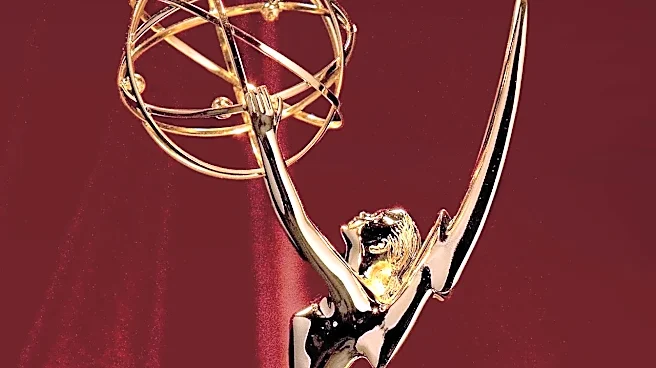
Most viewers are familiar with the concept of a great opening title sequence—the slick, cinematic intros to shows like Severance or The Last of Us that have their own Emmy category for Outstanding Main Title Design. But motion design is a different, and arguably
more integrated, art form. Recognized with its own juried Emmy, Outstanding Motion Design honors the graphics within a program. Think of it as the show’s complete visual vocabulary: the animated charts in a documentary, the slick lower-thirds that introduce a speaker, the elegant transitions between segments, and the entire graphics package that gives a live event its unique feel. It’s the connective tissue that turns a collection of clips, speeches, and performances into a cohesive and visually engaging experience.
The Art of Visual Storytelling
At its core, motion design is about narrative. On a purely functional level, it delivers information—a nominee’s name, a show’s title, a statistic in a news report. But its true power lies in how it makes the audience feel. The choice of font, the speed of an animation, and the color palette all work together to set a tone. In a documentary, motion graphics can bring historical documents to life or make complex data feel urgent and understandable. During a live awards ceremony like the Creative Arts Emmys, the graphics package is the master of ceremonies. It builds suspense before a winner is announced, celebrates the victory with a flourish, and seamlessly guides the audience from one category to the next, ensuring the entire multi-hour broadcast feels like a single, polished production rather than a simple list of awards.
Inside an Emmy-Winning Vision
To understand what makes this craft award-worthy, look no further than recent winners. At the 2025 Creative Arts Emmys, the team behind Octopus! took home the juried prize for Outstanding Motion Design. In their acceptance speech, the creators gave thanks for the opportunity to tell stories with “beautiful handcrafted art.” That phrase gets to the heart of what separates exceptional motion design from standard on-screen text. It’s not just about software; it’s about artistry. The winning work likely demonstrated a unique aesthetic that was deeply integrated with the program's theme, using bespoke animation and thoughtful design to enhance the narrative rather than just decorate it. This peer-reviewed award, judged by fellow designers and visual effects artists, recognizes projects that display a high level of innovation, aesthetic quality, and narrative effectiveness.
The Unseen Creative Marathon
Winning an Emmy for Motion Design is a recognition of a grueling, highly collaborative process. Designers and animators work for weeks or months with producers and directors to develop a visual system that is both beautiful and functional. For a live broadcast, this system has to be flexible enough to handle any contingency while maintaining a consistent look and feel. Every element, from the massive screen backdrops to the smallest animated logo, must work in harmony. The fact that the Emmy for Motion Design is a juried award—meaning a special panel of experts selects the winner rather than a general membership vote—underscores its status as a top-tier craft honor. It validates the immense, often invisible, contribution that these artists make to the television we watch every day, proving that even a simple piece of information can become a moment of entertainment.