


Myth: It's a Low-Maintenance, 'Wash-and-Go' Style
The term “wash-and-go” is perhaps one of the biggest misnomers in hair care. For many Black women, particularly those with coily and kinky textures, there is no simple washing and going. The process is anchored by “wash day,” a ritual that can consume
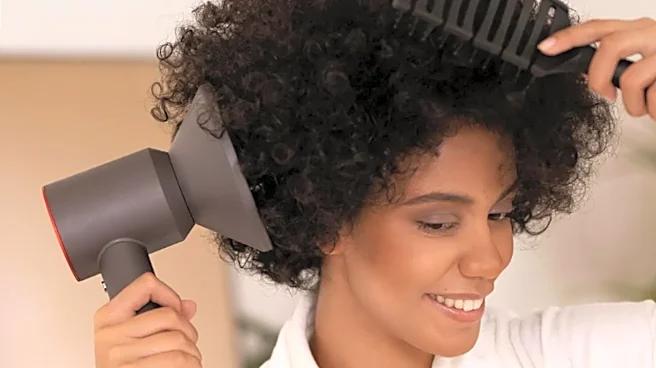
anywhere from two to four hours, and sometimes an entire day. It's a multi-step process that often includes a pre-shampoo treatment (pre-poo) to prevent stripping natural oils, cleansing with a sulfate-free shampoo or a co-wash, detangling in sections, and a deep-conditioning treatment that may sit for 20-45 minutes. After rinsing, a careful layering of products—leave-in conditioners, creams, and sealing oils—is applied to lock in moisture before the hair is styled. This intensive labor is a routine commitment, not a casual act.
Myth: It's Purely an Aesthetic Choice
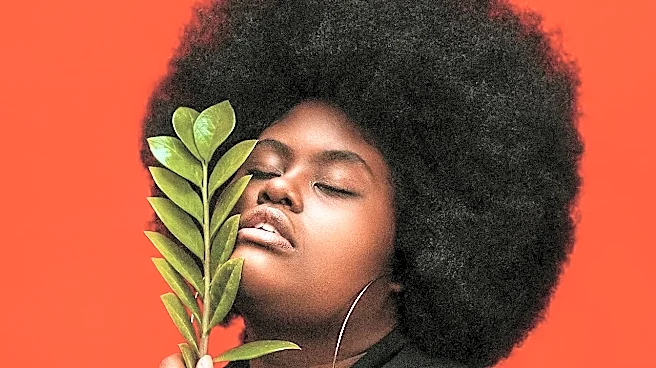
To view natural hair as just a hairstyle is to miss its profound cultural and political significance. For centuries, Eurocentric beauty standards pressured Black women to chemically straighten their hair to be seen as professional or acceptable. The modern natural hair movement is a direct descendant of the Civil Rights era, when the Afro became a powerful symbol of Black pride, resistance, and self-love. Today, wearing natural hair remains a statement of identity and heritage. This connection is so potent that it has led to legal battles. The CROWN Act (Creating a Respectful and Open World for Natural Hair), enacted in numerous states, was created to explicitly prohibit race-based hair discrimination in workplaces and schools, which often penalize styles like braids, locs, and Afros. This legislation underscores that for Black women, hair is not just personal—it's political.
Myth: 'Natural' Means Using No Products
The word “natural” refers to the hair’s texture being free from chemical straighteners, not free from products. In reality, maintaining the health and moisture of natural hair requires a sophisticated and often expensive arsenal of specialized products. The Black hair care industry is valued at over $2.5 billion, with Black women spending significantly more on hair products than other demographics. Because coily hair textures can be prone to dryness, a host of products are essential: moisturizing shampoos, co-washes (conditioner-only washes), deep conditioners, leave-in conditioners, curl creams, gels, butters, and oils. Each product serves a specific purpose, from cleansing without stripping to defining curls and sealing in vital moisture. The notion of a product-free routine ignores the science and economic engine behind keeping natural hair healthy.
Myth: All Natural Hair Is Cared for the Same Way
There is no one-size-fits-all regimen for natural hair. The community uses a detailed typing system—ranging from Type 3 (curly) to Type 4 (coily), with subclassifications like 4A, 4B, and 4C—to describe different curl patterns. But even this is just a starting point. A person's routine is also dictated by their hair's porosity (its ability to absorb and retain moisture), density, and thickness. What works for one person's 4A, high-porosity hair could be a disaster for another's 4C, low-porosity hair. This is why you'll see a vibrant online community of Black women sharing incredibly detailed accounts of their personal routines, product cocktails, and techniques. The journey is one of constant learning and individual experimentation, far from a universal set of rules.