






The Gothic Blueprint of Fear
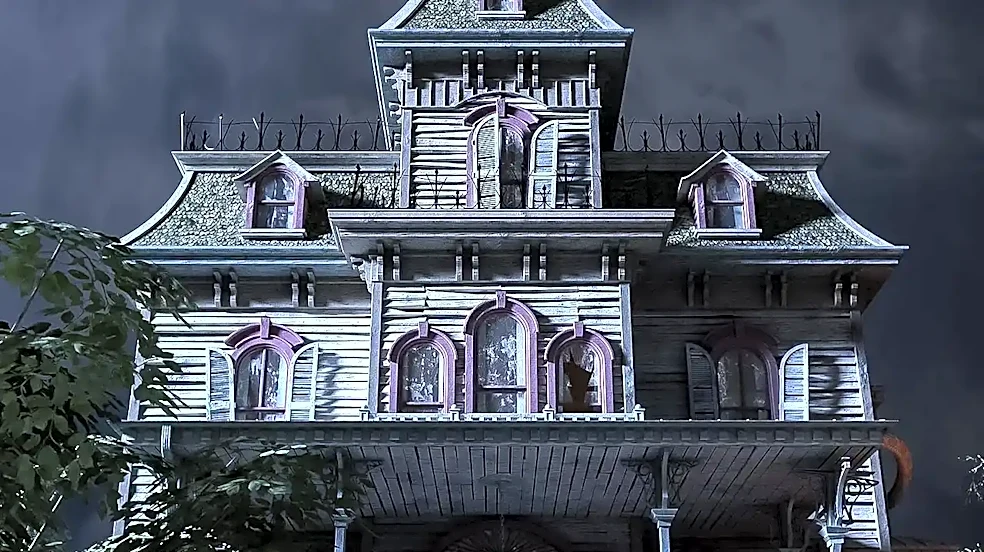
The original haunted house was a product of distance and decay. Gothic literature, from 'The Castle of Otranto' to Edgar Allan Poe's 'The Fall of the House of Usher', established the trope: a sprawling, isolated manor, often in a state of ruin, serves
as a tomb for buried family secrets. These weren't just settings; they were characters in themselves, with architecture that mirrored the psychological collapse of their inhabitants. The horror was external and aristocratic—something that happened in remote European castles or crumbling New England estates, safely removed from the average person's life. Shirley Jackson's 1959 novel 'The Haunting of Hill House' perfected this model, presenting a mansion so psychologically toxic it was described as being 'born bad'. The terror was embedded in the very walls of a place set apart from the world.
Horror Moves to Main Street
The cultural shift arrived with the post-war boom of American suburbia. As families flocked to newly built, uniform communities, horror followed. The genre's focus pivoted from the ancient and remote to the new and familiar. The turning point was 1979's 'The Amityville Horror'. Based on a supposedly true story, the film terrified audiences not because the house was a gothic monstrosity, but because it was a completely ordinary Dutch Colonial in a Long Island suburb. The Lutz family moved into their dream home only to be chased out by a demonic presence. The film's subtext resonated deeply with the economic anxieties of the era. As author Stephen King noted, the story tapped into fears of financial ruin, bad investments, and the hidden costs of homeownership, making the supernatural horror a metaphor for the real-world stress of keeping a family afloat.
The Suburban Dream Becomes a Nightmare
If 'Amityville' opened the door, 1982's 'Poltergeist' blew it off its hinges. The film, a collaboration between Tobe Hooper and Steven Spielberg, weaponized the very fabric of suburban life. The Freeling family lives in Cuesta Verde, a sunny California planned community where every house looks the same. The horror doesn't come from an ancient curse but from the television set, children's toys, and the very ground the subdivision was built on—a desecrated cemetery. 'Poltergeist' is a powerful critique of soulless consumerism and the idea that the shiny, new American dream might be built on a corrupt foundation. It showed that the greatest threat wasn't an invading force from a faraway castle, but a malevolence that was already inside the house, beamed directly into the living room.
The Terror Is Coming From Inside the House
In the decades since, suburban horror has only become more intimate and claustrophobic. The rise of the found-footage genre with films like 'Paranormal Activity' took the final step, removing the Hollywood gloss entirely. The haunting was no longer a spectacle of floating objects and green slime, but an unseen presence captured on a grainy home security camera. The horror was mundane, unfolding in the bedroom and hallway while the inhabitants slept. This evolution reflects a shift in our anxieties. The fear is no longer of aristocratic decay or historical secrets, but of the instability within our own domestic sanctuaries. The house itself, once a symbol of safety and achievement, becomes the source of terror. It suggests that the most unsettling ghosts aren't those from a distant past, but the ones that stem from our own unresolved issues and the fragile nature of modern life.