



Schiaparelli: For the Unabashed Surrealist
If you delight in Loewe’s weirder moments—the anthurium tops, the pixelated hoodies, the shoes clutching cracked eggs—then Daniel Roseberry’s Schiaparelli is your next logical obsession. While Loewe keeps one foot in the wearable world, Schiaparelli plants
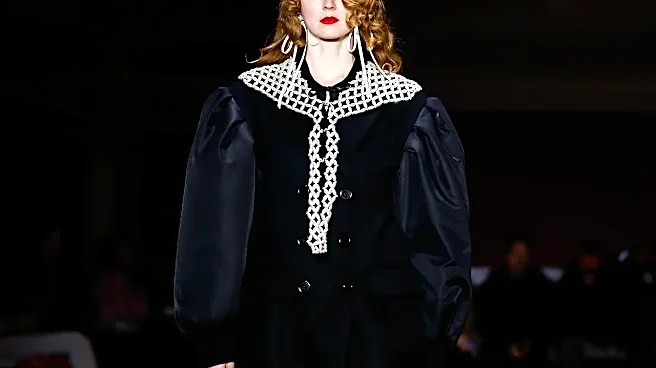
both feet firmly in the realm of dreams. Roseberry has resurrected the house founder’s legacy of surrealism with a Texan’s flair for drama and a master jeweler’s precision. Where Anderson offers a deflated balloon on a shoe, Roseberry presents a gown adorned with a gilded anatomical lung necklace or a corseted torso sculpted from metal. His recent collections have been described as explorations of feeling over form, using materials like silicone, preserved flowers, and baked fish scales to create wearable art that challenges the very idea of a garment. It’s fashion that asks questions, prioritizing inspiration over commercialism in a way that feels like a direct dialogue with Loewe's most artistic impulses.
Marni: For the Playful Art Student
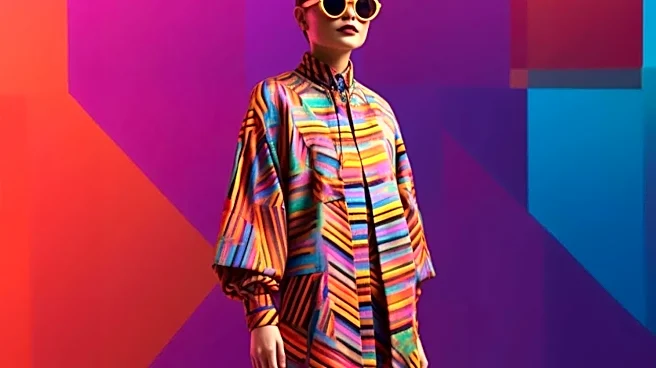
A key part of Loewe’s charm under Anderson is its embrace of the handmade, the slightly imperfect, and the joyfully tactile. This is a spirit shared wholeheartedly by Marni under the creative direction of Francesco Risso. Marni offers a similarly cerebral but more bohemian and colorful alternative. Risso’s collections are a riot of fuzzy textures, mismatched stripes, and deconstructed shapes that look like they were dreamed up in a flurry of creative energy. There's a shared emphasis on raw-edged materials and a silhouette that is generous and often a little strange, prioritizing artistic expression over traditional flattery. If Loewe is the art gallery installation, Marni is the open-studio party. It’s for the person who loves Loewe’s embrace of craft but wants to wear that principle with a bit more anarchic glee and a lot more primary color.
Bottega Veneta: For the Material Innovator
At first glance, Matthieu Blazy’s Bottega Veneta might seem too quiet and refined for a Loewe fan. But look closer, and you’ll find the same deep, obsessive commitment to materiality and craft. Anderson’s genius often lies in turning one material into another—a leather bag that looks like a paper bag, for instance. Blazy plays a similar game with an even more subtle hand. His runway has become famous for its material trickery: what appears to be a simple flannel shirt and jeans is, in fact, painstakingly printed leather. The house's signature 'intrecciato' weave is constantly reimagined in unexpected forms. This is 'stealth wealth' fashion, but it’s rooted in the same principle that guides Loewe: that the ultimate luxury is a command of craft so complete it allows you to create your own reality. It's an intellectual game played with fabric and form, rewarding those who take the time to truly look.
Dries Van Noten: For the Intellectual Romantic
For decades, Dries Van Noten has been the standard-bearer for designers who prize creativity and integrity over hype. Much like Anderson, Van Noten is an artist's designer. His work is a masterful blend of rich textiles, unexpected color pairings, and prints often derived from art and nature. There is a deep appreciation for craftsmanship and narrative in every collection. The brand has built its legacy on a quiet, confident intelligence, eschewing overt branding for the intrinsic value of the clothes themselves. If you appreciate how Anderson collaborates with the art world and builds seasons around specific creative concepts, you will find a kindred spirit in Van Noten. His clothes are for people who love the history of fashion and art, and who want to wear pieces that feel both deeply personal and universally beautiful. It’s a sophisticated, slightly melancholic romance that complements Loewe’s witty modernism perfectly.