







It’s Not a Team, It’s a Country
The fundamental difference between the World Cup and nearly every other major sporting event is the unit of allegiance. You don't root for a city's franchise or a university's team; you root for your nation. For one month, a soccer team becomes the avatar for an entire country's history, pride, and aspirations. When Brazil plays, 215 million Brazilians feel they are on the field. When England inevitably faces a penalty shootout, it’s a national psychological drama broadcast on a global stage. This isn't like rooting for the Dallas Cowboys, “America’s Team.” This is rooting for America, the team. For many nations, success on the soccer pitch is one of the few arenas where they can compete on equal footing with global superpowers. A victory for Senegal
over France, or for Croatia making a deep run, is a profound statement of national identity that transcends sport. It becomes a source of collective memory and a moment of unity that politics or economics can rarely provide.
The Agony and Ecstasy of the Four-Year Wait
The NFL has a Super Bowl every year. The NBA crowns a champion every June. In the world of club sports, there's always “next year.” The World Cup’s masterstroke is its scarcity. It happens only once every four years, an eternity in the modern sports cycle. This long wait amplifies the stakes to an almost unbearable degree. An entire generation of a country’s golden players might only get one or two real shots at glory. A single mistake—a missed penalty, a red card—can haunt a nation for decades. This four-year pilgrimage makes the tournament feel less like a recurring championship and more like a sacred festival. It creates a rhythm to people's lives. Fans plan vacations, save money, and arrange their lives around this single month. The rarity makes every moment precious and every defeat catastrophic, forging a level of emotional investment that annual events simply can't replicate.
The Traveling Armies and the Global Party
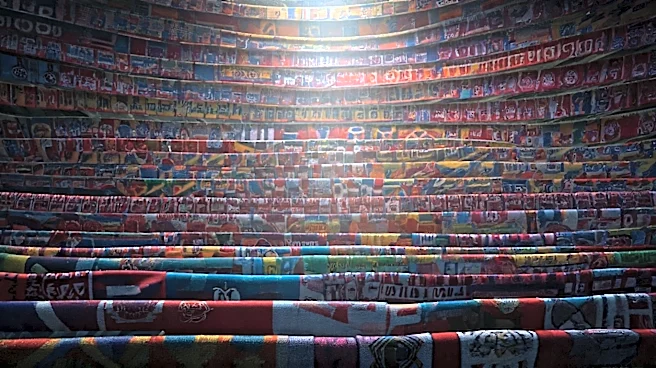
While American fans travel for big games, the World Cup invasion is a phenomenon without parallel. For one month, the host nation becomes a vibrant, chaotic, and overwhelmingly joyful mosaic of global cultures. You see entire city blocks turned orange by Dutch fans (the *Oranje*), witness tens of thousands of Argentinians singing in unison for hours (a constant, passionate choir), and find Japanese fans famously staying behind after matches to clean the stadium, win or lose. These “traveling armies” aren't just there to watch a game; they are on a cultural pilgrimage. They come to represent their country, not just with flags and jerseys, but with songs, chants, and an infectious spirit of goodwill. The atmosphere in a World Cup host city isn't one of adversarial tension but of a massive, month-long block party where the price of admission is simply a love for the game and a willingness to share a beer with a stranger from another continent.
A Single, Shared Conversation
Perhaps the most unique aspect of the World Cup is its ability to create a truly global, singular conversation. For four weeks, the entire planet is watching the same story unfold. The same heroes and villains emerge. The same controversial calls are debated in pubs in Dublin, cafes in Cairo, and offices in Seoul. It’s the only time when a barber in Lagos, a programmer in Tokyo, and a student in Chicago are all united by the same drama. The Super Bowl is a massive American event with some international interest. The Olympics are a collection of hundreds of different stories. The World Cup is one story, with one ball, followed by billions. It’s a shared language that requires no translation, a common ground that temporarily erases borders and melts political divides, all in the pursuit of seeing a ball go into the back of a net.