
Some movie scenes are just moments in a film; others become cultural touchstones. The Thanksgiving dinner in 'Scent of a Woman' is the latter, a masterclass in tension and release, all orchestrated by
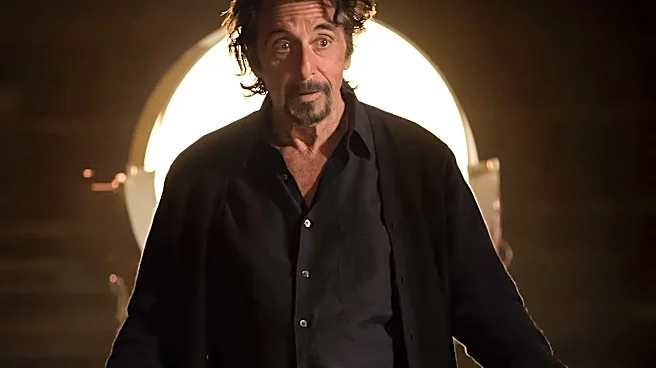
Al Pacino's volcanic performance.
Setting the Table for a Showdown
The scene is a hornet’s nest before Frank Slade (Pacino) even speaks. He and his young companion, Charlie (Chris O’Donnell), are unwelcome guests at his brother’s home. The air is thick with old resentments. Director Martin Brest masterfully uses wide shots to establish the geography of the family battlefield, with Frank positioned at the head of the table like a deposed king. The forced pleasantries and stilted conversation are the calm before a storm everyone knows is coming. It’s a perfect setup for a character like Slade, a man who thrives on psychological warfare and cannot tolerate inauthenticity. The dinner isn’t a meal; it’s an arena.
The Power of Silence and Stillness
Pacino's initial move is his most brilliant: he does almost nothing. He sits, listens, and absorbs the tension. Playing a blind man, he’s denied the use of his famously expressive eyes, yet he 'sees' everything. His head turns with predatory slowness toward each speaker, his silence growing louder and more menacing than any shout. This quiet intensity builds unbearable anticipation. When his smarmy nephew, Randy (a pitch-perfect Bradley Whitford), begins to prod him about his past, Frank’s stillness becomes a coiled spring. He lets Randy talk, giving him more and more rope, and the audience holds its breath, waiting for him to finally use it.
A Symphony of Vocal Aggression
When Frank finally unleashes, it’s not a simple explosion; it's a symphony. Pacino’s performance is a study in vocal dynamics. He moves from a low, gravelly drawl to a precise, cutting whisper, and then erupts into the full-throated, barracks-room roar that he became famous for. His insults aren’t just loud; they’re surgically precise. He targets Randy’s insecurities about his job, his manhood, and his character with devastating accuracy. The iconic 'Hoo-ah!' is less a catchphrase and more a punctuation mark on his dominance, a verbal planting of the flag. This dynamic range keeps the audience completely off-balance and riveted.
Physicality as a Weapon
Even seated and blind, Pacino commands the physical space. He leans forward, claiming the table as his territory. His hands are expressive, first resting with deceptive calm, then gesturing with sharp, aggressive points, and finally gripping the table as he prepares to lunge. The performance culminates in a moment of shocking physical violence when Frank puts Randy in a chokehold. It's a sudden, terrifying escalation that proves his earlier threats were not just the ramblings of a bitter old man. He demonstrates that despite his blindness, the retired Lieutenant Colonel is still a dangerous, physical force.
The Attack and the Defense
The confrontation is a two-way street. Randy exposes the humiliating truth of how Frank lost his sight in a drunken, foolish accident involving grenades, not in a heroic act of war. This revelation strips Frank of his carefully constructed military facade, leaving him vulnerable. But it’s this very vulnerability that triggers his most ferocious defense. He deflects by attacking, not just Randy, but the entire family's 'sanctimonious' posture. More importantly, he pivots to defend Charlie, the one person who has shown him loyalty. This turn transforms his rage from purely destructive to protective, adding a layer of nobility to his outburst and solidifying the bond at the film's core.