



Ever admired a suede jacket, only to find a flaw later? The secret to spotting uneven color isn't in the stitching—it's hidden in the fabric's signature texture. Here’s what to look for before you buy so you can shop like an expert.
First, What Exactly Is Suede Nap?
Before we get into
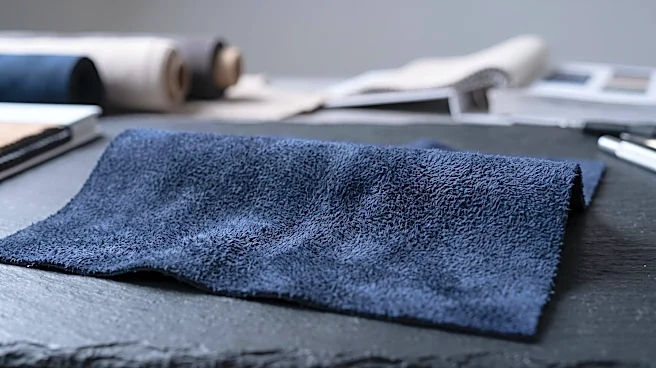
color, let's talk texture. Suede is a type of leather made from the underside of an animal hide. Unlike smooth, glossy leather, which uses the tough outer skin, suede's surface is buffed to create thousands of tiny, raised fibers. This gives it that signature soft, velvety feel. That fuzzy surface is called the 'nap'. Think of it like a dense, microscopic forest of fibers. When you run your hand across suede, you're bending those fibers, which is why the color appears to shift from light to dark. This isn't a flaw; it’s the defining characteristic of the material.
The Challenge of a Perfect Dye Job
Dyeing suede is a delicate process. Because the material is essentially the porous, fibrous inner layer of a hide, it soaks up dye like a sponge. Achieving a perfectly uniform color across an entire hide is notoriously difficult. Factors like the density of the fibers and variations in the hide itself can cause the dye to absorb unevenly, resulting in subtle blotches, streaks, or patches that are slightly lighter or darker than the rest of the piece. During manufacturing, several thin coats of dye are often applied to build up the color, but inconsistencies can still occur. These minor imperfections are often not immediately obvious, especially under the flat, bright lights of a retail store.
How the Nap Becomes a Truth-Teller
This is where the nap works its magic. As you know, brushing the nap changes its direction and how it reflects light. When the dye job is perfectly even, the color will shift between lighter and darker tones of the same shade. But if the dye is inconsistent, the nap will amplify the flaw. Brushing the fibers back and forth will expose underlying patchiness. A streaky area that was invisible when the nap was lying flat might suddenly pop out as a distinct line of a slightly different hue when the fibers are brushed against their natural grain. The multi-directional texture acts like a magnifying glass for color variation, revealing issues that a flat surface would conceal.
Why Seams and Edges Can Be Deceiving
So why don't seams show this? Seams are where the material is cut, folded, and stitched together. In these areas, the nap is often compressed, glued, or simply less visible. The very construction of the seam flattens the fibers, neutralizing their ability to show light and dark variations. An edge might look perfectly colored because the fibers are all lying flat and uniformly, hiding the patchiness that would be visible just an inch away on the main surface. This is why just checking the seams of a suede garment isn't enough; the true test of color consistency lies in the wide, open surfaces where the nap is most active.
Your New Shopping Superpower
Now you have the insider knowledge. When you're considering a suede purchase—be it shoes, a bag, or a jacket—don't just give it a quick glance. Run your hand across the surface in broad strokes, both with and against the grain. Tilt it under different light sources. Look for any areas where the color doesn't just get lighter or darker, but seems to shift to a slightly different shade or reveal streaks. Pay attention to large panels, like the back of a jacket or the front of a cushion. A high-quality piece will have a consistent and even color, no matter which way you brush its nap. By checking the nap instead of just the seams, you're using the material's own properties to verify its quality.