







A Production on the Brink
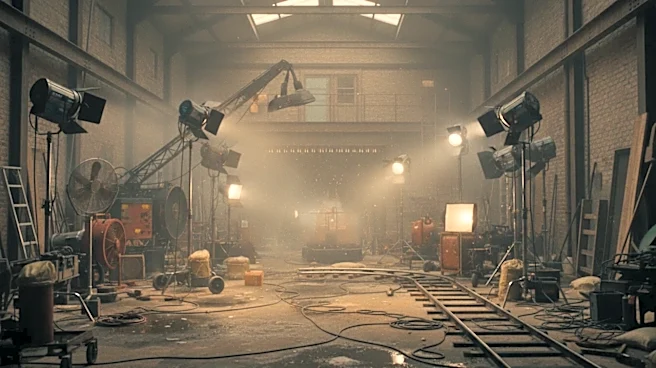
Long before Tony Montana’s mansion was riddled with bullets, the film’s production was already under siege. The original plan to shoot in Miami was derailed by protests from the Cuban community, who were angered by the script's portrayal of them as gangsters.
This forced a costly move to Los Angeles, where sets had to be meticulously dressed to mimic the vibrant, sun-drenched feel of Florida. On top of location woes, the production faced a ballooning budget, a schedule that stretched three months longer than planned, and a screenwriter, Oliver Stone, who was battling his own cocaine addiction while writing the script. Director Brian De Palma even had to kick Stone off the set for giving notes to the actors, creating a tense atmosphere where a single, unified vision was under constant threat.
The Chainsaw and the Censors
The most significant crisis facing Scarface was its war with the Motion Picture Association of America (MPAA). The board repeatedly slapped the film with an X rating—a commercial death sentence in 1983, reserved mostly for pornography—citing its extreme violence and profanity. The now-infamous chainsaw scene was a primary point of contention. De Palma’s challenge was to create a moment of unbearable, skin-crawling horror without actually showing the graphic details that would guarantee the dreaded X. The solution was a masterclass in misdirection. By focusing the camera on Al Pacino’s horrified face, using visceral sound effects, and cutting away at the critical moment, the filmmakers made the audience’s imagination do the gruesome work. The terror is implied, not shown, a practical effect of psychology and editing that was far more powerful and ultimately allowed the scene to remain in the picture.
Choreographing Carnage
The film’s climactic shootout is a symphony of destruction, an operatic finale that cemented Tony Montana’s legend. But it was also a direct response to the production's limitations and rating battles. De Palma, a director known for his meticulous, Hitchcock-inspired visual storytelling, approached the violence with an artist’s eye. He instructed his team to make the violence beautiful, placing it inside gorgeous, brightly lit compositions. The final siege isn't just a gunfight; it's a meticulously choreographed ballet of squibs, sparks, and shattering glass. Instead of hiding the violence, De Palma leaned into its excess, stylizing it to the point where it became more cinematic than realistic. This approach served a dual purpose: it created an unforgettable spectacle and, paradoxically, made the violence palatable enough to eventually secure an R rating after a heated appeals process.
De Palma's Sleight of Hand
Ultimately, the practical effects that hid the production crisis weren’t just about blood and gore; they were about directorial control. Brian De Palma’s signature long takes and sweeping camera movements were more than just stylistic flourishes. They were tools to orchestrate the chaos, both on-screen and off. By guiding the viewer’s eye with precision, he could build tension, mask budget or location limitations, and create a sense of an immersive, controlled world even when the production itself was anything but. It was this cinematic sleight of hand, this ability to turn problems into style, that allowed Scarface to transcend its difficult birth. The film's overwhelming, almost suffocating aesthetic was a direct product of a director wrestling a chaotic reality into a singular, uncompromising vision.