







In horror, some of the most dreadful moments unfold not in a graveyard or a dungeon, but in a simple hallway. This isn't a coincidence. It’s a masterful cinematic technique designed to weaponize architecture against your sense of safety.
More Than Just a Passageway
A corridor in
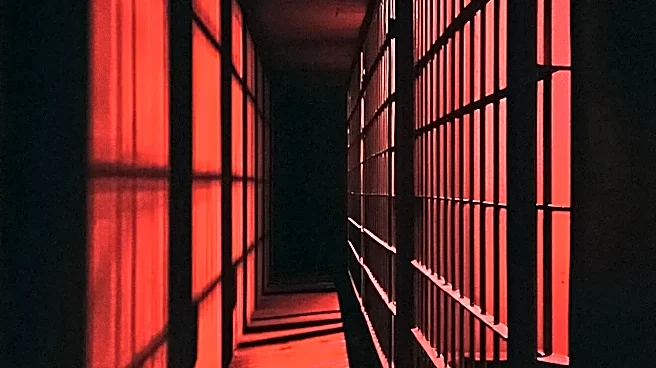
a horror movie is never just a way to get from one room to another; it's a transitional space loaded with psychological tension. By definition, a hallway is a place of transit—you're not meant to stay there. This in-betweenness creates a feeling of being ungrounded and exposed. With long, narrow walls, it becomes a claustrophobic trap with limited escape routes. The audience is forced to stare down its length, anticipating what might emerge from the shadows or around a distant corner. Filmmakers know that what you can't see is often more terrifying than what you can, and a hallway is the perfect stage for that fear of the unknown.
The Kubrickian Blueprint
No discussion of terrifying corridors is complete without mentioning Stanley Kubrick, whose work in 'The Shining' wrote the textbook on architectural dread. Kubrick masterfully used one-point perspective, a technique where all parallel lines converge at a single vanishing point in the center of the frame. When Danny rides his Big Wheel through the Overlook Hotel's hallways, the camera’s perfect symmetry draws your eye unwillingly toward the horizon. This creates a hypnotic, almost unbearable sense of forced focus. The relentless geometry and repeating patterns of the hotel’s carpets and walls feel unnatural and inescapable, turning the building itself into a labyrinthine antagonist that’s as much a threat as any ghost.
The Psychology of the Visual Funnel
The power of the corridor shot lies in its ability to manipulate our natural instincts. Humans are hardwired to scan environments for safety, looking for exits and open sightlines. A long hallway shot does the opposite: it funnels our vision, removing peripheral awareness and forcing us to concentrate on a single point of potential danger. This technique makes viewers feel both exposed, because of the long sightline, and trapped, due to the enclosing walls. By placing the camera at a low angle, as Kubrick often did, it can also make the space feel vast and the character within it appear small and vulnerable. This combination of visual cues creates a powerful feeling of helplessness and impending doom.
Enduring Hallways of Horror
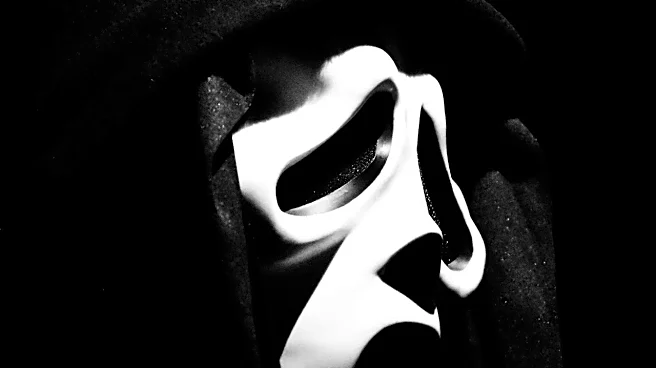
The corridor shot's legacy is everywhere in modern horror. The famous static shot in 'The Exorcist III' uses a long hospital hallway to build agonizing suspense before a sudden jump scare. Found footage films like '[REC]' and 'The Blair Witch Project' use narrow, dark spaces to amplify disorientation and claustrophobia. Even in suburban settings, like in 'Halloween' or 'Scream', hallways become vectors of threat, where a familiar space is twisted into a hunting ground. These films prove that whether it's a grand, haunted hotel or a normal suburban home, a well-framed corridor remains one of the most reliable and effective tools in a filmmaker's arsenal for turning a simple setting into a geography of fear.