


The Original Rebellion: More Than Sequins
Before the flapper, women’s fashion was defined by restriction. Victorian and Edwardian ideals demanded corsets, long skirts, and piled-up hair, creating a decorative, immobile silhouette. The 1920s shattered that mold. Post-war and armed with new social
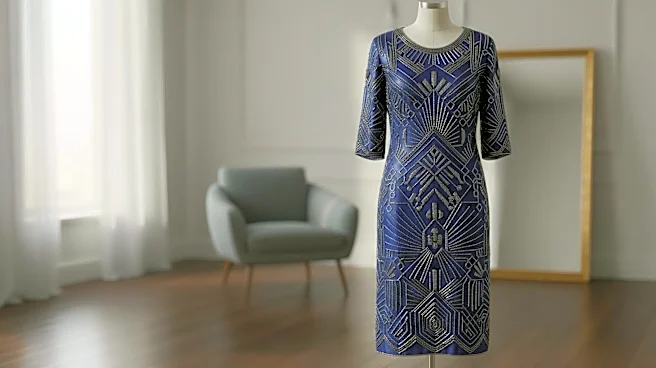
freedoms like the right to vote, the “New Woman” demanded a new uniform. Flapper fashion was a radical declaration of independence. The style was defined by a straight, boyish silhouette that de-emphasized the bust and waist, with hemlines rising scandalously to the knee. Drop-waist dresses in comfortable, modern fabrics allowed women to move, walk, and, most importantly, dance the Charleston. Paired with bobbed hair, cloche hats, and a newfound acceptance of cosmetics, the flapper wasn't just a style; she was a social statement about freedom, youth, and modernity.
Cycle 1: Depression-Era Femininity
The stock market crash of 1929 didn't just tank the economy; it brought the freewheeling Jazz Age to a halt. The fashion that followed was a complete reversal of the flapper’s boyish rebellion. In the 1930s, hemlines dropped back down, and the natural waistline returned with a vengeance. The ideal silhouette became softer, more traditionally feminine, and influenced by the escapist glamour of Hollywood. Gone was the straight, flat-chested look; in its place were bias-cut gowns that clung to the body’s curves and day dresses with puffed sleeves and defined waists. Austerity and a renewed focus on domesticity meant that the carefree, expensive-looking flapper dress felt out of touch. This new, softer femininity should have been the end of the garçonne look, burying its androgyny under layers of romanticism.
Cycle 2: The Hyper-Feminine Fifties
If the 1930s were a soft retreat from the flapper, the post-WWII era was a full-blown counter-revolution. In 1947, Christian Dior unveiled his “New Look,” a style that would dominate the next decade. It was the aesthetic antithesis of the 1920s. Dior’s designs featured rounded shoulders, a dramatically cinched “wasp waist,” and enormous, voluminous skirts that could use many yards of fabric. After years of wartime rationing and utilitarian clothing, the New Look was a celebration of opulence and an exaggerated, almost restrictive femininity. The ideal was a mature, hourglass figure—a world away from the flapper's youthful, slim-hipped frame. This return to structured undergarments and a more traditionally domestic female ideal was a direct repudiation of the freedom and comfort the 1920s had introduced.
Cycle 3: The Era of Executive Realness
The 1980s introduced a new kind of female power, but its uniform was again at odds with the flapper’s ethos. This was the decade of “power dressing.” As more women entered the corporate world, they adopted a wardrobe designed to command respect in a male-dominated environment. This meant tailored suits with massive shoulder pads, creating a strong, almost aggressive V-shaped torso. Inspired by TV shows like Dynasty, the look was all about sharp angles, bold colors, and asserting presence. While it was a form of female empowerment, it relied on adopting masculine-coded tailoring. The flapper’s power came from liberation from structure; the 80s power suit found it within structure. The soft, unrestrained shift dress had no place in a world of rigid shoulder pads and executive ambition.
The Undying Echo of Freedom
So how did the flapper survive? Because it was never just a dress; it was an idea. The core principles of comfort, movement, and youthful rebellion are too powerful to stay buried for long. The first major revival came in the 1960s. The mod-era A-line shift dresses worn by models like Twiggy were a direct echo of the 1920s silhouette. Once again, a youthquake generation rejected the restrictive styles of their parents (the '50s New Look) in favor of short, straight, and liberating shapes. The flapper’s influence resurfaced again in the minimalist 1990s with the rise of the slinky slip dress and has been a recurring muse for designers ever since. The drop waist, the beading, the fringe—they all come back. But more importantly, the idea that women’s clothing should be comfortable and freeing is now a permanent part of fashion’s DNA.