




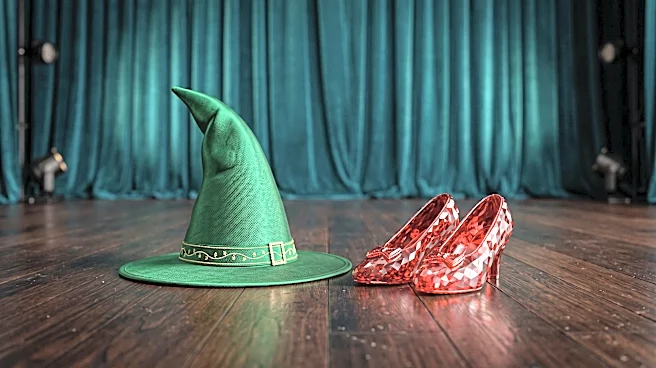
With the second part of the 'Wicked' film adaptation hitting theaters, a timeless question returns: must you be a 'Wizard of Oz' devotee to fall for Elphaba? The short answer is no. Here’s why these two tales of Oz are entirely different beasts.
The Long Shadow of the Ruby Slippers
First,
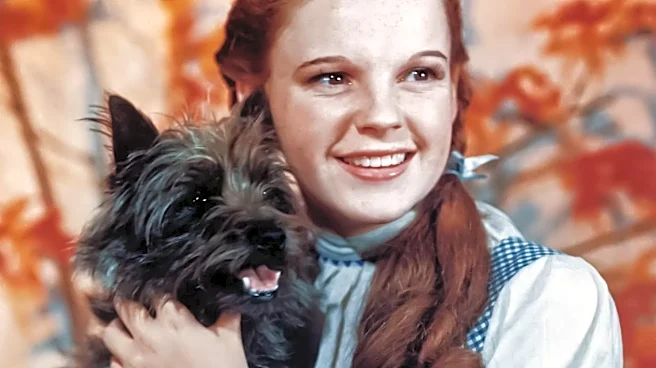
let's acknowledge the monolith. The 1939 film 'The Wizard of Oz' is more than a movie; it's a piece of Americana. Its annual television broadcasts from the 1950s onward cemented it in the cultural consciousness for generations. It’s a story of earnest, wide-eyed wonder with a clear moral compass. Dorothy wants to go home, the Scarecrow wants a brain, and the Wicked Witch is unambiguously evil. Its revolutionary use of Technicolor created an unforgettable visual language, and its core message—that everything you need is already inside you—is as comforting as a warm blanket. For many, loving 'The Wizard of Oz' is about nostalgia and its simple, powerful fairy-tale structure. It offers a sense of safety and a belief that, in the end, there's no place like home.
Not a Prequel, But a Remix
'Wicked' isn't just about what happened before Dorothy dropped in. Based on Gregory Maguire's 1995 novel, the story fundamentally reframes the world of Oz. It asks the audience to question everything they thought they knew. What if the Wicked Witch wasn't wicked at all, but a misunderstood activist? What if the wonderful Wizard was a fraudulent, power-hungry politician? The musical, which became a Broadway phenomenon after its 2003 debut, tells the story of Elphaba, a talented magic-user born with green skin who is ostracized for being different. Her journey from bright, idealistic student to 'Public Enemy Number One' is a complex tragedy about propaganda, prejudice, and how history is written by the victors. It doesn't just add to the 'Oz' story; it completely subverts it.
A Tale of Two Tones
This is where the real separation lies. 'The Wizard of Oz' is a quest narrative about finding your way back to a familiar world. Its conflicts are external and its morality is black and white. 'Wicked', on the other hand, is a political and social allegory about the complexities of good and evil. It explores systemic oppression through the subjugation of the talking Animals and exposes the Wizard's regime as a corrupt government that manufactures a common enemy to consolidate power. The emotional core of 'Wicked' isn't a girl trying to get home; it's the powerful, fraught, and ultimately transformative friendship between Elphaba and Glinda the Good. Their relationship—full of jealousy, loyalty, and regret—is the engine of the story, making it a deeply personal and character-driven drama rather than a simple adventure.
Changed 'For Good'
Ultimately, the two stories offer entirely different emotional payoffs. 'The Wizard of Oz' provides comfort. 'Wicked' provides catharsis. Songs like 'Over the Rainbow' are about yearning for a better place, while 'Wicked' anthems like 'Defying Gravity' are about creating your own place in a world that rejects you. The latter is an empowering declaration of self against an unjust system. You can adore the simple charm of Dorothy's journey without ever needing to engage with the political disillusionment at the heart of Elphaba's. Conversely, you can be deeply moved by Elphaba and Glinda's bittersweet bond, as captured in the song 'For Good,' without having a nostalgic connection to the 1939 film. One is a classic fairy tale, the other is its modern deconstruction.