

Art, Not Just Apparel
To understand the appeal of early Vibskov, you have to understand the man himself. Graduating from London's prestigious Central Saint Martins in 2001, Vibskov was never just a fashion designer. He is a multidisciplinary artist, musician, and curator whose
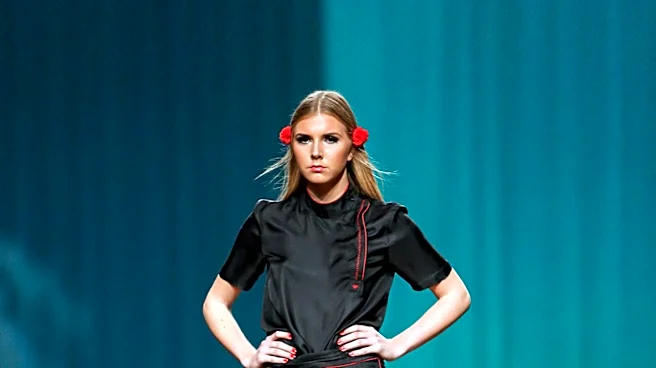
clothing collections are merely one facet of a larger creative universe. His runway shows are legendary performance art pieces with titles like “The Big Wet Shiny Boobies” and “The Land of the Black Carrots.” These shows feature elaborate, often bizarre, installations that create an immersive world. An early garment isn't just a piece of clothing; it's a tangible artifact from a fleeting, fantastical experience, a wearable piece of a performance. This makes owning one feel like owning a piece of art history, not just last decade's fashion.
A Rejection of Minimalism
Long before “dopamine dressing” entered the lexicon, Vibskov was a master of joyful, chaotic, and colorful design. His early work from the 2000s stands in stark contrast to the prevailing minimalism of the time. He championed unconventional silhouettes, clashing patterns, and a playful, almost surrealist aesthetic. Think oversized knits with unexpected textures, trousers with bizarrely wonderful prints, and sculptural forms that challenge the shape of the human body. In today's landscape, where many luxury brands have converged on a similar, quiet aesthetic, the weird and wonderful world of early Vibskov feels fresh and rebellious. For collectors, these pieces are a vibrant statement against conformity.
The 'IYKYK' Factor
Part of the allure is the built-in scarcity. In the early 2000s, Vibskov's label was a small, independent operation. His collections were produced in limited quantities, far from the mass-produced scale of today's global fashion houses. Finding an early piece on resale sites like Depop or The RealReal is a genuine hunt. Owning one doesn't scream wealth in the way a logo-covered handbag does. Instead, it signals a deeper, more nuanced understanding of fashion culture. It’s a piece of “if you know, you know” cultural capital, a nod to fellow fans who recognize the significance of a particular print from a 2007 collection or a specific silhouette from his graduate show.
Wearable Storytelling
Ultimately, collecting early Henrik Vibskov is about buying into a story. Each piece is imbued with the narrative of his cross-disciplinary practice, from his work designing for ballets and operas to his time drumming in the band Trentemøller. His creations are a fusion of Scandinavian sensibilities with a global, avant-garde perspective. They are clothes for people who don't want their outfits to be a blank slate, but rather a conversation starter. The bold colors, strange shapes, and intricate details are all part of a unique dialogue between the wearer and the designer's expansive artistic vision. These are not just vintage clothes; they are pieces of a continuous creative project that has been unfolding for over two decades.