







The Coronation of a King
The Azteca’s legend was born in the vibrant color of the 1970 World Cup, the first tournament broadcast globally in color. The world watched as a Brazilian side, playing with a rhythm and flair that defined the term “the beautiful game,” danced its way
to the final. Their king was Pelé, already a two-time champion, seeking his third and final crown. On June 21, 1970, on the Azteca pitch, he delivered. Pelé scored the opening goal with a powerful header in a dominant 4-1 victory over Italy. The image of him being carried off the field on his teammates' shoulders, a sombrero on his head, cemented both his status as the greatest of his era and the Azteca as a stage for icons. The tournament also hosted the “Game of the Century,” a breathtaking 4-3 semifinal victory for Italy over West Germany, adding another layer to the stadium’s instant mystique.
The Altar of a Handful God
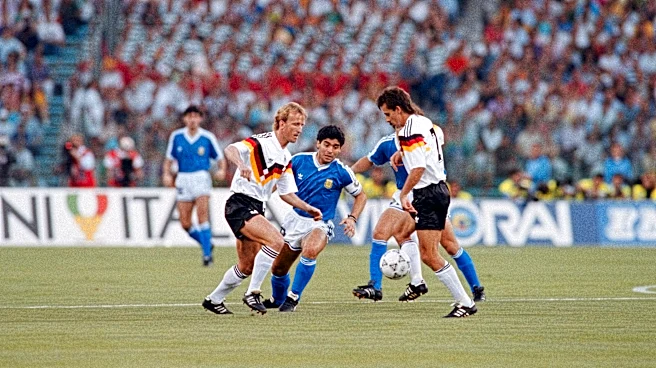
If 1970 was a coronation, 1986 was a controversial and brilliant ascension. The tournament belonged to one man: Diego Maradona. And the Azteca was his personal altar. On June 22, in a politically charged quarter-final against England, Maradona produced two of the most famous goals in soccer history within four minutes. The first was the infamous “Hand of God,” a blatant but unseen handball that gave Argentina the lead. The second was the “Goal of the Century,” a mesmerizing 60-yard dash where he weaved through half the English team before scoring. It was a sequence that perfectly encapsulated his flawed genius. Argentina would go on to win the final in the very same stadium, defeating West Germany 3-2 to give Maradona his own moment of World Cup glory on the same pitch where Pelé had celebrated his 16 years earlier.
Why No Other Ground Compares
Many stadiums are historic. Rio de Janeiro’s Maracanã also hosted two finals. London’s Wembley and Rome’s Stadio Olimpico have seen their share of glory. But none can match the sheer density of iconic, generation-defining moments seen at the Azteca. It is the only stadium in the world to see both Pelé and Diego Maradona—arguably the two greatest players to ever live—lift the World Cup trophy. The narrative is almost poetic: the king of one generation passing the torch on the same hallowed ground to the hero of the next. It hosted what many consider the greatest team goal (Brazil, 1970 final), the greatest individual goal (Maradona, 1986), and the most infamous goal (Maradona, 1986) in the tournament's history. Its high altitude, at over 7,200 feet, adds another layer, creating a unique and challenging environment that has tested the lungs and resolve of the world’s best teams for decades.
A Trilogy of Greatness
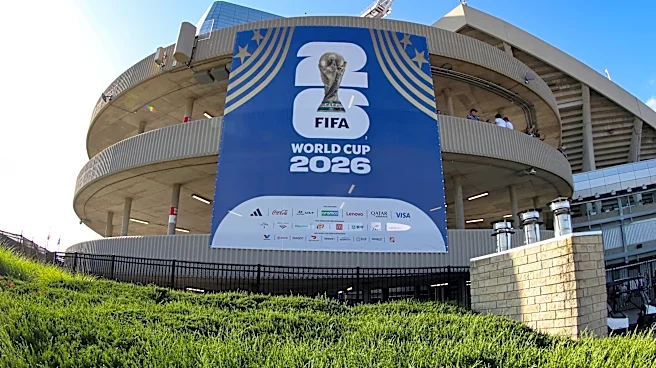
The story doesn't end in 1986. As the FIFA World Cup returns to North America in 2026, the Azteca is set to make history once more. When the tournament kicks off on June 11, 2026, the legendary venue will host the opening match, officially becoming the first and only stadium to host games in three separate men's World Cups (1970, 1986, and 2026). This feat solidifies its unique place in sports history, turning its double act into an unprecedented trilogy. While the final will be held in the United States, the honor of opening the world’s biggest sporting event for a record third time cements the Azteca not merely as a piece of soccer's past, but as a living, breathing connection across more than half a century of the game.