








More Than a Pretty Backdrop
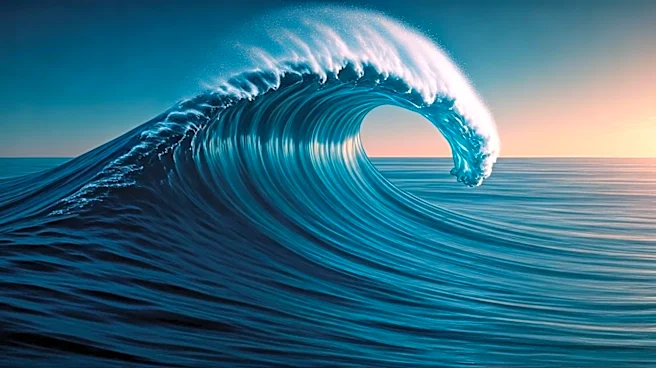
In the original animated film, the Ocean was Moana’s first friend and most loyal guide. It playfully splashed with her as a toddler, parted to reveal the Heart of Te Fiti, and served as her protector on a treacherous journey. This isn't just scenery;
it’s a character with agency, emotion, and a clear personality—all without speaking a single word. Recreating this sentient force in a live-action world, where audiences expect a higher degree of realism, presents a monumental task for director Thomas Kail and the visual effects teams at Industrial Light & Magic. The goal isn't just to make realistic water, but to give that water a soul.
The Limits of a Traditional Sidekick
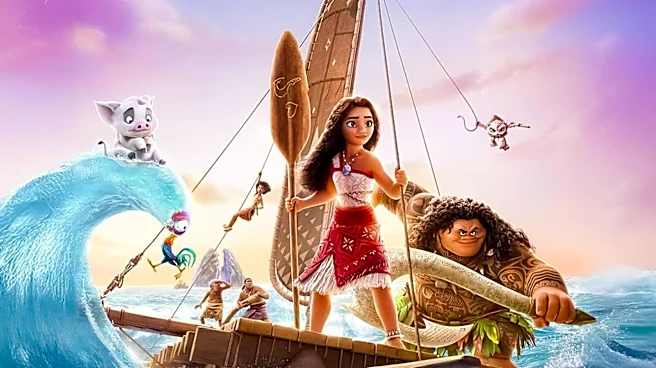
Think about classic Disney sidekicks. Characters like Heihei and Pua from the original 'Moana,' or even 'Aladdin's' Genie and 'Mulan's' Mushu, serve specific functions. They provide comic relief, explain plot points, and offer emotional support. They have faces, voices, and familiar body language that animators can use to convey personality. A sidekick is a shortcut to the hero’s inner world. The Ocean, however, has none of these tools. It cannot frown, crack a joke, or deliver a heartfelt monologue. Its performance must be conveyed entirely through movement, shape, and interaction with the physical world, making it an entirely different class of character.
The Language of Water
So how do you make a wave act? The challenge for the live-action 'Moana' is to give the ocean personality without it looking like a cartoon. The original animation team faced a similar issue, using a custom program called Splash and treating the character almost like a digital sock puppet that was then layered with realistic water simulations. For the live-action film, the pressure is even higher. The VFX artists must blend photorealistic water physics with intentional, character-driven movement. A playful splash, a gentle nudge of the canoe, a towering wall of protection—each action must feel both physically believable as water and emotionally readable as a character's choice. Animating something without limbs or a face requires a deep understanding of how to communicate emotion through abstract forms and motion.
A New Kind of Performance
This isn't just about good special effects; it's about pioneering a new form of character animation. While a character like Maui is brought to life by Dwayne Johnson's performance, the Ocean is brought to life by a team of animators and VFX artists giving a collective performance. They must function as digital puppeteers, deciding how this formless entity will react in every scene. They have to animate not just how the water looks, but how it feels. Is it angry, playful, serene, or determined? Conveying these states through billions of simulated water particles is an artistic and technical feat far more complex than animating a talking animal. This turns the VFX team into primary storytellers, responsible for one of the film's most crucial roles.
The Ultimate Scene Partner
The complexity extends to the human actors. Catherine Laga‘aia, who plays Moana, has to act opposite a character that isn't physically there. She must react to and interact with a force that will only be added months later in post-production. Her performance is intrinsically linked to the Ocean's invisible presence. This makes the Ocean more than just an effect; it's an active scene partner that influences the hero's journey and emotional state. While some early reactions to the trailer have been mixed on the CGI's seamlessness, the creative ambition remains clear: to create a character that is both an elemental force of nature and an intimate companion.