

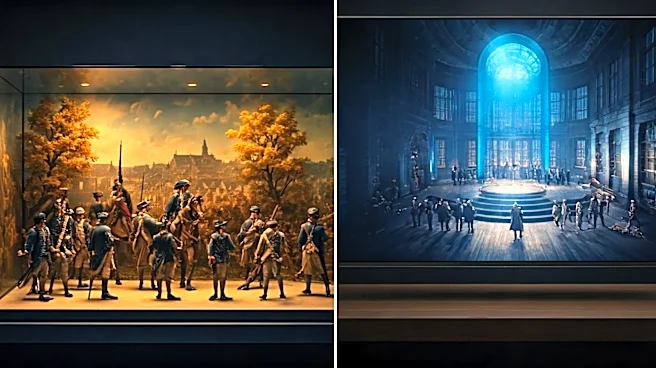


More Than Just Fireworks
First, let's clarify what America 250 is. It isn't just a single day on July 4, 2026. It's a multi-year commemoration that began in 2025, involving federal, state, and local initiatives designed to reflect on the nation's founding. The official commission,
America250, is working alongside a White House task force to organize a vast array of events, from a "Great American State Fair" on the National Mall to local community potlucks. This sprawling, nationwide observance provides a massive, built-in marketing hook and a rare piece of common ground for a programming event. Major networks are already blanketing the airwaves with special coverage, documentaries, and live reports from celebration hubs like Washington, D.C., and Philadelphia. It's a tentpole event that screams for more than just news coverage; it begs for narrative content.
Reality TV Has Grown Up (Mostly)
The other side of the equation is the evolution of reality television itself. The genre is no longer just about stranding strangers on an island or watching socialites flip tables. Today's most successful formats are often high-concept, character-driven social experiments with cinematic production values. Shows like "The Traitors" prove that putting modern people in a high-stakes, structured environment creates compelling psychological drama. Meanwhile, series focused on real-life expertise and professional worlds have also found a significant audience. This is a far cry from the historically-themed shows of the past, like PBS's "Colonial House" or the BBC's "The 1900 House," which were often more academic than dramatic. The 2026 reality TV playbook is more sophisticated, focusing on authentic human reactions within an artificial construct—a model perfectly suited for a historical setting.
The Hunger for a Shared Story
In a media landscape splintered into a million streaming niches and political bubbles, a truly massive, shared cultural event is rare. The Super Bowl and the Olympics are among the last of their kind. America 250 offers a similar, albeit more complex, opportunity. It’s a national moment that cuts across demographics, providing a unique chance for programmers to create an event that feels unifying. A show that taps into this moment could draw a broad audience hungry for a story they can all participate in. The key wouldn’t be a dry recitation of facts, but a compelling human drama. Imagine a competition series where contestants must master 18th-century skills, form alliances based on colonial-era social structures, and navigate challenges drawn from the real struggles of 1776. The drama isn't about historical reenactment; it's about modern personalities clashing with historical limitations.
The Secret Sauce: Emotional Authenticity
The reason this new breed of historical reality TV could be “surprisingly watchable” is that it wouldn’t be pretending to be a documentary. Its strength would lie in its emotional, not historical, authenticity. We wouldn’t watch to see a perfect recreation of the past. We’d watch for the same reason we watch any good reality show: to see real people make tough decisions under pressure. How does a 21st-century tech bro handle a world without a smartphone? How does a fiercely independent modern woman navigate a society that severely restricts her rights? The conflict is inherent. The scripted historical drama genre has already proven this works, with shows like "The Crown" and "John Adams" succeeding by focusing on the personal struggles of historical figures. A reality show could do the same, letting its cast create the narrative through their own authentic reactions, making history feel immediate and intensely personal.