





More Than a Machine, It's a Character
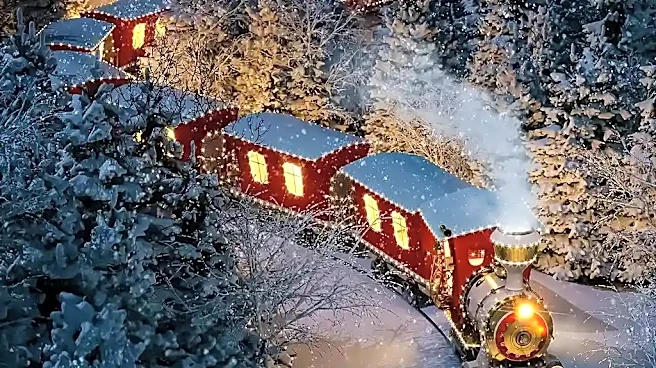
From the moment it thunders to a halt outside the Hero Boy’s house, hissing steam and groaning like a waking beast, the Polar Express establishes itself not as an object, but as a character. It doesn't have lines, but it has a powerful presence. Its whistle
isn't just a sound; it’s a call to adventure, a beckoning cry for those on the verge of losing their faith. The design of the locomotive—a classic American 2-8-4 Berkshire steam engine—is both nostalgic and imposing. It feels powerful, unstoppable, and slightly dangerous, mirroring the journey the children are about to take. The train is a living entity, its rhythmic clatter a constant heartbeat driving the narrative forward, and its metallic groans and sighs punctuating the emotional weight of each scene.
The Crucible of Belief
The conductor famously says, 'It doesn't matter where the train is going. What matters is deciding to get on.' This line reframes the entire journey. The train is not just a path to Santa, but a test of faith. Every car and every challenge aboard the locomotive serves a narrative purpose. The warm, inviting passenger cars, filled with singing children and a spectacular hot chocolate service, represent the joy and community that belief can bring. In contrast, the perilous journey on the roof or the out-of-control slide across a frozen lake symbolize the dangers of wavering faith. The train becomes a crucible, forcing the Hero Boy to confront his doubts. His physical journey—climbing over cars, navigating icy surfaces, and pulling the emergency brake—is a direct parallel to his internal struggle to recommit to belief in the unseen.
An Engine for Spectacle and Tension
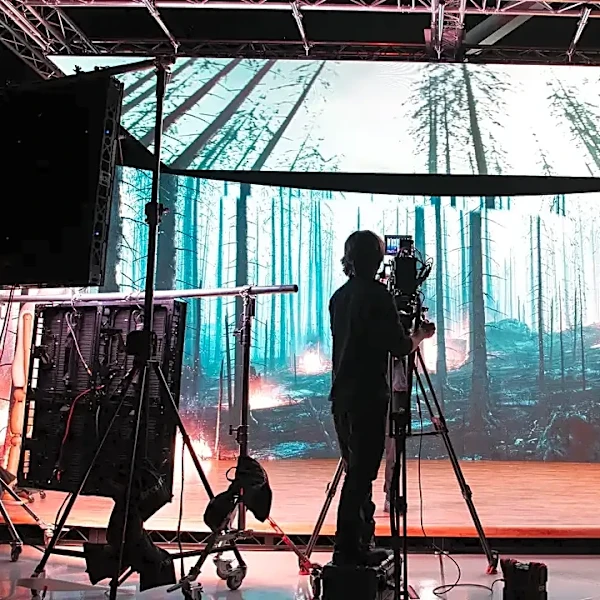
Director Robert Zemeckis uses the train as a dynamic stage for some of the film's most memorable action sequences. The 'performance capture' animation, groundbreaking for its time, allows for impossible camera angles that race alongside the speeding locomotive, dip under its wheels, and soar over its roof. This technique turns the train ride into a breathtaking spectacle. The frantic race to put a loose cotter pin back in the throttle, the herd of caribou blocking the tracks, and the wild, terrifying slide across cracking ice are all moments where the train itself generates immense cinematic tension. These sequences aren't just thrilling filler; they are visual metaphors for the chaotic, unpredictable nature of taking a leap of faith. The train, in these moments, is both the source of the problem and the only hope for salvation.
A Bridge Between Two Worlds
Ultimately, the Polar Express serves as a bridge—not just between a suburban home and the North Pole, but between the mundane world of skepticism and the magical realm of belief. It materializes in a real, tangible space, yet it operates on magical principles, defying physics and logic. The train is the physical manifestation of the Christmas spirit, a tangible object that allows the children to access something intangible. It's the mechanism that makes the impossible journey possible. When it departs at the end, leaving only the sound of a fading bell, its purpose is fulfilled. It has not only delivered the children to Santa but has also successfully transported its main passenger from a state of doubt to one of enduring faith, proving that the journey itself was the true gift.