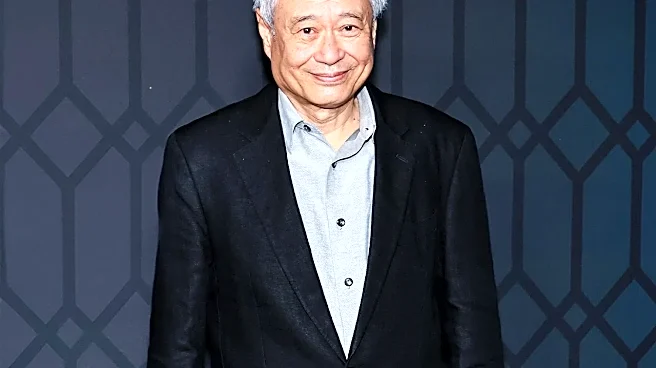






Ang Lee is a master of many genres, but his films share a common soul. They are defined by emotional depth, repressed desires, and breathtaking visuals, whether in a martial arts epic or a quiet drama. If you admire his work, these five films offer that
same magic.
Yi Yi (A One and a Two...) (2000)
If you appreciate the sprawling family dynamics of 'Eat Drink Man Woman', you'll fall for Edward Yang's 'Yi Yi'. This three-hour Taiwanese masterpiece follows the triumphs and tribulations of the Jian family in Taipei, seen through the eyes of a father, a teenage daughter, and a young son. Like Lee, Yang uses a patient, observant style, allowing profound emotional truths to surface from the quiet moments of everyday life. It’s a film about love, loss, work, and the simple, painful, and beautiful reality of being alive, capturing the generational conflicts and philosophical questions that make Lee's family dramas so rich. The young boy, Yang-Yang, who photographs the back of people's heads to show them what they can't see, is a perfect metaphor for the film's gentle, insightful perspective.
In the Mood for Love (2000)
For fans of the devastating, unspoken romance in 'Lust, Caution' or 'Brokeback Mountain', Wong Kar-wai's 'In the Mood for Love' is essential viewing. Set in 1960s Hong Kong, it follows two neighbors, a man and a woman, who discover their respective spouses are having an affair. They form a bond, but it’s one built on restraint, longing, and shared loneliness. Director Wong Kar-wai, a master of mood, uses lush colors, sublime costumes, and hypnotic slow-motion to tell a story where glances, gestures, and silence speak louder than words. The film captures that classic Ang Lee theme: the agony and beauty of repressed emotion, where societal rules and personal duty create an impossible cage for the heart. It's less a story about an affair and more a poem about the feeling of almost having one.
Hero (2002)
If 'Crouching Tiger, Hidden Dragon' is your favorite Ang Lee film, then Zhang Yimou’s 'Hero' is the perfect follow-up. This martial arts epic is a visual spectacle that redefined the wuxia genre. The story is told through a series of flashbacks, as a nameless warrior recounts to the King of Qin how he defeated three legendary assassins. What makes it so brilliant—and so resonant for a Lee fan—is its use of color to tell the story. Each version of the narrative is drenched in a different, symbolic color palette (red, blue, green), reflecting the narrator's shifting perspective and emotional state. It’s a film that blends breathtaking action with a philosophical meditation on sacrifice, honor, and the nature of truth, proving that a martial arts film can also be a profound work of art.
The Rider (2017)
Ang Lee has a unique talent for exploring American identity, from the repressed cowboys of 'Brokeback Mountain' to the suburban angst of 'The Ice Storm'. Chloé Zhao’s 'The Rider' shares that same empathetic, outsider’s gaze. The film stars Brady Jandreau as a fictionalized version of himself, a young rodeo star on a Lakota Sioux reservation whose career is abruptly ended by a severe head injury. Blurring the line between documentary and fiction, Zhao crafts a deeply moving story about a man forced to redefine his identity when his life's purpose is taken from him. Like Lee's best work, it’s a quiet, character-driven film that explores masculinity in crisis with incredible sensitivity. The stunning, wide-open landscapes of South Dakota feel as much a character as the people within them, creating a modern Western that is both beautiful and heartbreaking.
A Single Man (2009)
The profound grief and forbidden love of 'Brokeback Mountain' find a stylistic cousin in Tom Ford's directorial debut. 'A Single Man' follows a day in the life of George Falconer, a British college professor in 1962 Los Angeles, who is struggling to find meaning after the sudden death of his longtime partner. As a renowned fashion designer, Ford brings an obsessive attention to visual detail to every frame. From the impeccable mid-century modern architecture to Colin Firth’s perfectly tailored suits, the film's beauty is almost suffocating—a polished, controlled surface hiding a world of pain. This tension between external perfection and internal collapse is pure Ang Lee. It's a film about memory, beauty, and the desperate attempt to maintain order in the face of overwhelming sorrow, executed with unforgettable style and a deeply moving performance from Firth.