








A Title That's a Promise
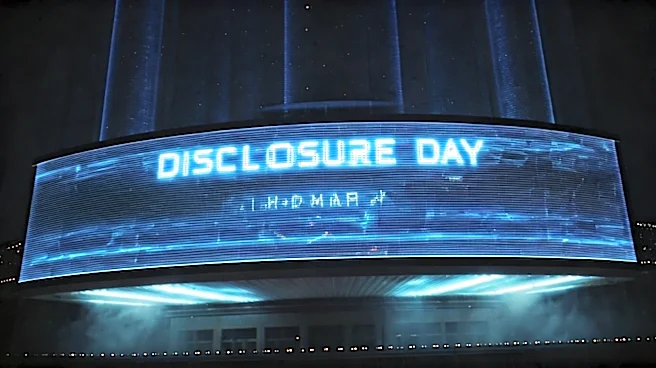
First, let's talk about that name. In the world of Ufology and online paranormal investigation, “Disclosure” isn’t just a word; it’s an event. It refers to the long-theorized moment when world governments will finally and officially admit the existence
of non-human intelligence and their presence on Earth. It’s the Super Bowl for conspiracy theorists and the curious alike. By naming a film *Disclosure Day*, you’re not just titling a movie; you’re making a promise to the audience. You're signaling that this story won’t be about a random alien invasion like *Independence Day*. Instead, it's about the political, social, and psychological fallout of having our entire understanding of the universe upended. This framing immediately invites speculation: What “truth” will be revealed? And more importantly, what will be left out? The title itself is the first breadcrumb on a trail designed to be followed.
An Engine for Ambiguity
The most potent “theory-friendly” films—think *Inception*, *2001: A Space Odyssey*, or even *Arrival*—are built on a foundation of deliberate ambiguity. They give you enough information to feel grounded but leave massive gaps for you to fill in with your own interpretations. A movie about government disclosure is the perfect vehicle for this. The central conflict wouldn't just be “humans vs. aliens.” It would be about information itself. Is the government telling the whole truth? Is the “disclosure” a carefully managed piece of propaganda to prevent mass panic? Are the aliens being portrayed honestly, or are their motives being spun? Every press conference, every leaked document, and every shadowy conversation in the film would become a piece of evidence for viewers to analyze. A character’s strange glance or a redacted line in a file would be enough to launch a thousand Reddit threads debating its “true” meaning. The movie wouldn't just be watched; it would be investigated.
Tapping the Real-World Zeitgeist
Here’s where a film like *Disclosure Day* would transcend typical sci-fi. It would be landing in a world where the line between science fiction and front-page news has never been blurrier. For decades, UFOs were a fringe topic. Today, they are the subject of Congressional hearings, Pentagon reports, and serious discussion on cable news. When former intelligence official David Grusch testified under oath about alleged government programs involving “non-human biologics,” he moved the conversation from basements to the Beltway. A movie released into this environment isn’t just a story; it’s a cultural Rorschach test. Audiences would walk in armed with knowledge of real-world events and personalities. They would inevitably draw parallels, wondering if a skeptical general in the film is based on a real Pentagon official or if a piece of fictional “evidence” mirrors a real-life claim. The film becomes a funhouse mirror reflecting our own anxieties and curiosities about what’s really going on.
The Search for Hidden Meaning
Modern audiences, especially genre fans, are trained to look for more. In an era of intricate cinematic universes and shows like *Westworld* that demand careful viewing, viewers expect hidden layers. A film like *Disclosure Day*, especially if helmed by a director known for meticulous detail or produced by a studio like A24 famed for its elevated genre fare, would be treated like an escape room. The marketing alone could be a masterclass in fueling speculation, using cryptic trailers, alternate reality games (ARGs), and viral websites full of redacted documents. This approach tells the audience that there are secrets to be found, turning the act of watching the movie into the first step of a larger puzzle. It gamifies the viewing experience, rewarding those who dig deeper and ensuring the conversation continues long after the credits roll. Every detail, from a poster’s design to a line of dialogue, becomes a potential clue in a grander conspiracy manufactured for our entertainment—and our obsession.