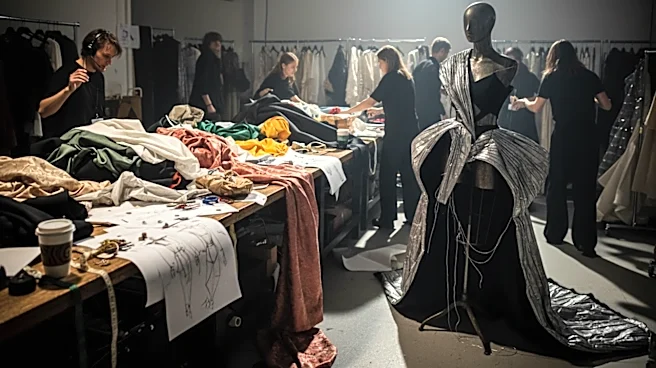









The Scene: A Graduation Show Like No Other
The year is 1995. The place is Central Saint Martins, London's legendary design college. It’s graduate show season, a time for aspiring designers to pour their hearts, souls, and student loans into a final collection, hoping to catch the eye of a discerning
editor or buyer. But for one student, the stakes felt different. That student was 23-year-old Stella McCartney, and the world was watching not just for her talent, but for her last name. In a class of hopefuls, she was already famous, and the buzz around her show was electric. She had spent her teen years interning for Christian Lacroix and honing her skills on Savile Row, but the question remained: was she the real deal, or just the beneficiary of a famous father? Her collection would have to answer that question, and she decided to answer it with a bang.
The Look and The Spectacle
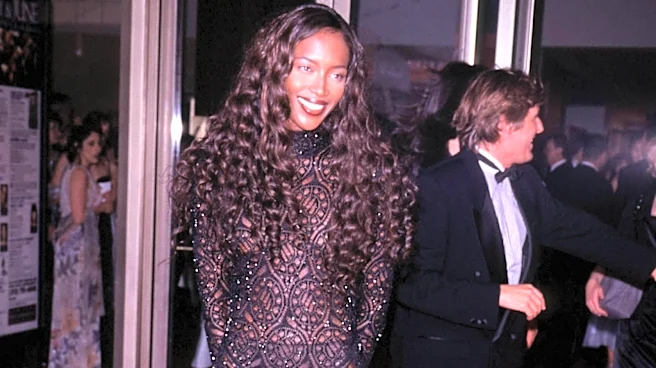
The collection itself was quintessentially '90s and pure Stella: slinky, lingerie-inspired slip dresses paired with sharp, masculine tailoring. It was confident, sexy, and effortlessly cool. One of the standout looks—a delicate camisole dress—was modeled by a young Kate Moss. But the clothes were only part of the story. The real spectacle was who was wearing them. Instead of the usual student models, McCartney's runway was graced by the biggest names in fashion: Naomi Campbell, Yasmin Le Bon, and Kate Moss, all personal friends, who modeled for free. As they walked, a custom-penned rock track by her father, Paul McCartney, titled “Stella May Day,” blasted through the speakers. Her proud parents, Paul and Linda, sat beaming in the front row. It wasn't a student show anymore; it was a major cultural event that instantly made front-page news around the world.
The Crisis: A Backlash of 'Nepotism'
This is where the fairytale nearly went off the rails. The very elements that made the show a sensation also created a significant backlash. The 'almost wasn't' moment wasn't a lost garment or a wardrobe malfunction; it was a crisis of credibility. Many in the industry were openly dismayed, dismissing the spectacle as a blatant use of connections that unfairly overshadowed her fellow students. The accusations of nepotism were swift and sharp. Even Karl Lagerfeld, whom she would later succeed at Chloé, publicly criticized the move. The overwhelming media attention could have easily typecast her as a dilettante, famous only for being famous. In later years, McCartney herself admitted to being “a bit embarrassed” by her own naivete, acknowledging that she didn't fully grasp how the move would be perceived. She had tried to go by 'Stella Martin' during her studies to avoid this very scenario, but her graduation show put her name, and the controversy, front and center.
The Legacy: From Controversy to Icon
The show could have been a cautionary tale, but instead, it became a launchpad. The entire collection was immediately bought by the influential London boutique Tokio and licensed to major international retailers. While the star power opened the door, the clothes had to stand on their own—and they did. Two years later, McCartney was appointed Creative Director at Chloé, where she and her assistant, Phoebe Philo, turned the brand into a commercial and critical powerhouse, silencing the critics who had doubted her. That 1995 show, with all its chaos and controversy, ultimately laid the groundwork for the brand she would build: one that skillfully balances celebrity and substance. It proved she had the nerve to command attention and, more importantly, the design talent to hold it. Her early work established a signature style of sharp, wearable femininity that remains at the core of her brand today, long after proving she was more than just her famous connections.