

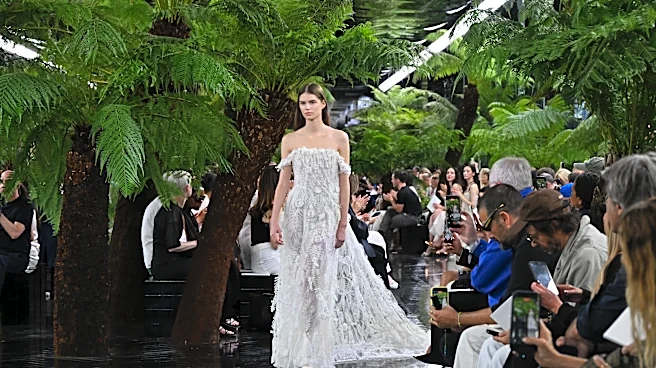


The Gown's DNA
To understand the couture pantsuit, you first have to understand the couture gown. The term "haute couture" is legally protected in France, reserved for houses that meet stringent criteria for hand-craftsmanship and bespoke service. A couture gown isn't
just a dress; it's a marvel of engineering and artistry that can take hundreds, or even thousands, of hours to create. It’s built from the inside out, often beginning with a custom-fit muslin, or toile, to perfect the silhouette. The process involves meticulous hand-stitching, intricate draping directly on a mannequin, and the use of structural elements like boning or layers of delicate fabrics to achieve a specific shape. The materials are the most luxurious available, and the embellishments—from beading to feather work—are hand-applied by specialized artisans. This is the world of the sublime, where fabric is sculpted and a garment becomes a wearable work of art.
When Tailoring Becomes Sculpture
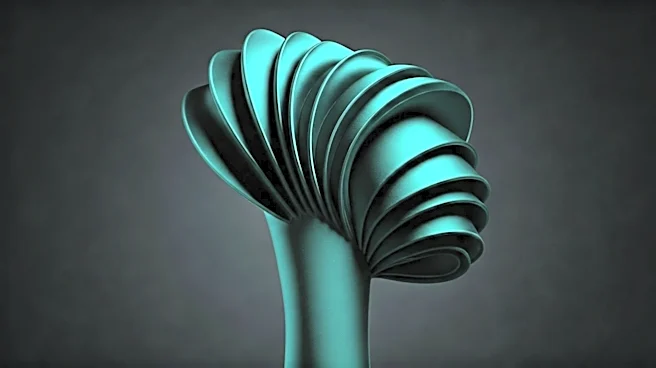
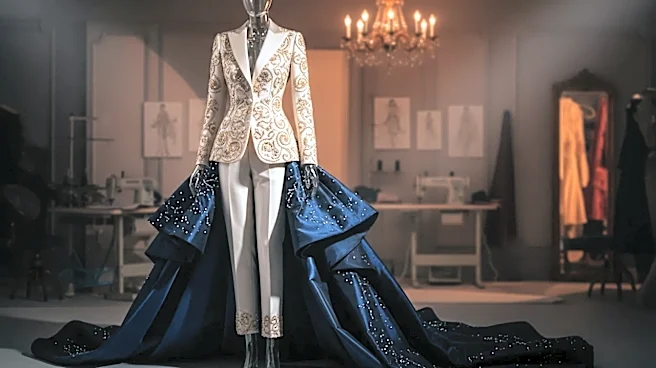
For decades, the pantsuit’s power came from its crisp, masculine-inspired tailoring. But today’s best couture versions are moving beyond traditional tailoring to embrace the sculptural, fabric-first approach of gown making. Designers at houses like Dior and Thom Browne are applying these techniques to the jacket and trouser. A jacket might be draped and molded with the precision of a bodice, while its lapels might cascade like pleated chiffon. Trousers are no longer just tailored; they are sculpted, with voluminous shapes or fluid draping that mimics the sweep of a skirt. At his recent shows, Thom Browne has presented tailoring that deconstructs and reassembles classic shapes, using hand-basting and layers of muslin to expose the garment's intricate construction, turning the work-in-progress itself into the final art form. This is no longer just about cutting cloth; it’s about manipulating it to create new, dramatic forms.
A New Language of Power
The evolution of the pantsuit from a symbol of rebellion to a corporate uniform is a well-told story. However, its transformation at the couture level signifies a deeper cultural shift. When Yves Saint Laurent introduced "Le Smoking" in 1966, it was a revolutionary act, translating a man's tuxedo for a woman's body. For years, the pantsuit's authority was tied to its menswear origins. What we're seeing now is different. By infusing the pantsuit with the techniques of eveningwear, designers are creating a new hybrid. It’s a garment that projects authority without sacrificing artistry, and power without forgoing femininity. This isn't about borrowing from the boys anymore; it's about creating a uniquely feminine and powerful statement piece that stands on its own. It's a garment for a woman who commands a room not by adopting a masculine uniform, but by embracing a form of elegance that is both strong and exquisitely crafted.
The Atelier's Touch in Action
Recent haute couture collections provide stunning evidence of this trend. At Dior, under Jonathan Anderson, a classic Bar Jacket might be softened with sheer layers or its rigid lines transformed into something more fluid and organic, inspired by sculpture. At Chanel, a house built on the suit, couture versions feature impossibly lightweight tweeds, intricate linings, and hand-finished details that ensure the garment moves with the grace of a dress. Meanwhile, at Schiaparelli, designer Daniel Roseberry has redefined tailoring with surrealist, sculptural elements, where a jacket is less a garment and more a piece of anatomical art. These are not simply well-made suits; they are narrative objects, infused with the same level of detail, imagination, and emotion once reserved exclusively for the most breathtaking ballgowns.