




The Legend Forged in the West
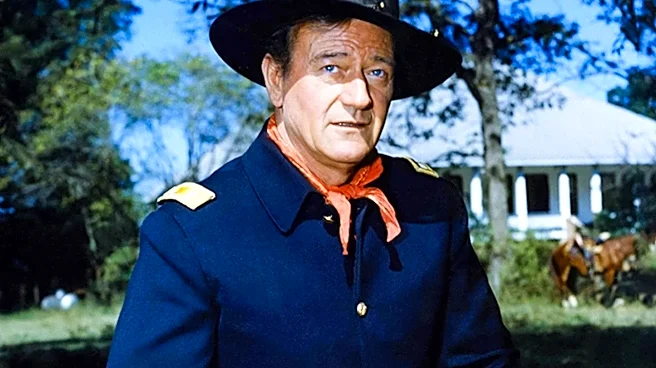
Before the poignant finale, there was the persona, carved from the very landscape of the American West. From his breakout in John Ford's "Stagecoach" (1939), John Wayne became more than an actor; he was a symbol. His signature walk, quiet strength, and on-screen
moral clarity defined the cinematic cowboy for generations. He was the tough, righteous hero in classics like "The Searchers" and "Rio Bravo," a man who couldn't be broken. This carefully crafted image of invincibility made his final roles all the more startling and resonant. It was the deconstruction of this very myth that would lead to his greatest performances.
Revisiting an Old Friend
The final chapter arguably began with "Rooster Cogburn" (1975), a sequel to his Oscar-winning performance in "True Grit." While on the surface it was a charismatic pairing with Katharine Hepburn that recalled "The African Queen," it was also a portrait of an aging lawman, past his prime but still clinging to his purpose. The film saw Wayne reprise his famous role not as a triumphant hero, but as a man whose body and world were failing him. He was slower, more vulnerable, and his familiar swagger was tempered by weariness. It was the first glimpse of the actor acknowledging the passage of time, setting the stage for the raw self-reflection that was to come.
Art Imitates Life in 'The Shootist'
Then came "The Shootist" (1976), his final film and the performance that serves as a stunningly poignant bookend to his 50-year career. Wayne played J.B. Books, a famed gunfighter who rides into town seeking a quiet place to die from terminal cancer. The parallels to Wayne's own life were profound and inescapable. Having survived lung cancer in 1964, the actor was in declining health during filming, lending an undeniable authenticity to his portrayal. The film, costarring legends like Lauren Bacall and James Stewart, was a quiet, character-driven story about legacy and facing death with dignity. The opening even uses clips from Wayne's older movies to construct the backstory of J.B. Books, explicitly merging the actor with the character.
The Performance Without a Mask
What made the role of J.B. Books so powerful was the vulnerability Wayne allowed himself to show. For the first time, the tough facade crumbled to reveal a man grappling with pain, regret, and the fear of a graceless end. He wasn't playing the invincible hero anymore; he was playing a man whose body had betrayed him. Wayne himself reportedly told friends, "This is as close to me as I'm ever going to get to playing myself." He insisted on script changes to ensure his character died with honor, refusing to shoot an enemy in the back because it was something John Wayne, the icon, would never do. This intersection of the man, the myth, and the mortal created a layered, heartbreaking performance that was less about acting and more about unflinching truth.