







The Girl with the Great Gams
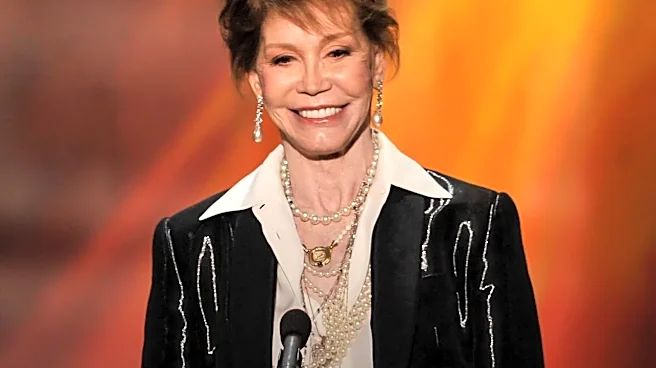
Before she was Laura Petrie or Mary Richards, Mary Tyler Moore was a jobbing actress trying to find her footing in Hollywood. Her career began as "Happy Hotpoint," a tiny dancing elf in appliance commercials. From there, she landed a recurring role that
was both a steady paycheck and a creative straitjacket. On the detective series Richard Diamond, Private Detective, she played Sam, the suave detective's mysterious and sultry telephone receptionist. The catch? The audience only ever heard her voice and saw her legs. Her face was never shown, and she wasn't even listed in the credits. This anonymity, combined with a string of auditions for generic secretary roles, left the ambitious young actress feeling typecast and deeply unfulfilled. The work was steady, but it wasn't the career she dreamed of.
A Week of Rejection
The breaking point came during a particularly brutal week of auditions. Moore, then in her early twenties, had faced a series of rejections for various roles. The constant stream of "no's" had worn her down. So when her agent called with yet another audition, this time for a new sitcom created by Carl Reiner, her initial reaction was exhaustion and defeat. "I can't take any more rejection," she told her agent, initially refusing to go. She felt she had failed at two other auditions that very week and was convinced this one would go the same way. The dream of being an actress was perilously close to ending, not with a bang, but with the quiet burnout of a performer tired of being told she wasn't right for the part.
The Audition That Changed Everything
Her agent, however, insisted she attend the audition for the role of Laura Petrie, the wife in what would become The Dick Van Dyke Show. Reluctantly, she went. Creator Carl Reiner had already seen dozens of actresses for the part and was beginning to lose hope. But as soon as a hesitant Mary Tyler Moore walked in, something clicked. He later recalled that after she read just the first line of the script, he knew he had found his Laura. There was a "ping in her voice" that was exactly right. He famously grabbed her by the head, marched her down the hall to producer Sheldon Leonard's office, and declared, "I found her." Moore, who had walked in expecting another failure, had just landed the role of a lifetime.
Becoming Laura Petrie
The role of Laura Petrie was more than just a job; it was a revolution. At a time when sitcom wives were often one-dimensional background characters, Laura was a vibrant, intelligent, and funny partner to her husband, Rob. She had been a dancer, she had opinions, and, most famously, she wore capri pants—a choice that was both stylish and a subtle declaration of her modern sensibility. Moore was initially hesitant about playing "another wife," but she quickly realized the quality of the writing and the depth of the character were unlike anything she had done before. The show was a perfect showcase for her comedic timing and her ability to convey both humor and heart, often in the same breath. The breakthrough she had longed for had finally arrived, transforming her from a faceless voice and a pair of legs into one of the most beloved faces on television.