





From Barracks to Barbershops
The story of the fade begins not in a trendy salon, but in the rigid world of the U.S. military in the 1940s and ‘50s. Soldiers needed a clean, low-maintenance cut that was practical for combat and projected an air of uniformity and discipline. The result
was a tight taper, short on the sides and back, which made wearing a helmet more comfortable and presented a sharp, orderly appearance. When soldiers returned to civilian life, they brought the haircut with them. But it was in Black and Latino barbershops in the decades that followed that the fade transformed from a military regulation into an art form. Barbers began experimenting, pushing the style's boundaries and turning it into a canvas for self-expression, particularly with the rise of hip-hop culture in the 1980s. The hi-top fade, worn by icons like Will Smith and Big Daddy Kane, became a symbol of cultural pride and individuality.
The Art of the Seamless Blend
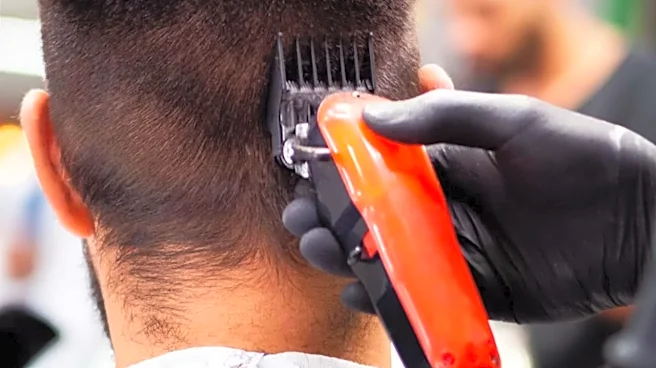
So, why don’t most salons have this history on display? The simple answer is that a true skin fade is exceptionally difficult to execute. It’s not a scissor cut; it’s a masterclass in using clippers. The goal is to create a gradual, seamless transition from bare skin to longer hair, with no visible lines or marks. This requires a deep understanding of clipper guards, a steady hand, and an artist’s eye for blending. A barber might use multiple tools—clippers with various guards, trimmers, and even a foil shaver or straight razor—to achieve that perfectly smooth gradient. It’s a time-consuming process that can’t be rushed. Many stylists in scissor-focused salons simply don't have the specialized training or daily practice required to master this clipper-heavy technique, which is why a request for a skin fade can sometimes result in visible lines or an uneven blend.
A Cultural Hub in the Chair
The difference between a salon and a barbershop often comes down to more than just tools and techniques. For generations, barbershops in Black and Latino communities have been vital cultural hubs—places for connection, conversation, and community. The fade wasn't just a service offered; it was a shared language and a cornerstone of the experience. Getting a fade was about more than just looking good; it was about participating in a ritual, affirming one's identity, and walking out feeling seen and understood. That cultural context is something that can't be easily replicated. A salon might be able to learn the steps, but the deep-seated cultural significance is woven into the very fabric of the traditional barbershop.
A Statement of Intent
Today, the fade is a global phenomenon, sported by men of all backgrounds. Its variations—low, mid, high, taper, burst—offer a spectrum of personal expression, from the subtle and professional to the bold and dramatic. But at its core, the skin fade remains a statement of intent. It communicates precision, cleanliness, and a deliberate attention to detail. It says that the wearer cares about their presentation. Whether it's the sharp, clean lines of a low taper fade popular in Latino communities or the striking contrast of a high and tight, the haircut is a symbol of taking pride in your appearance. It’s a visual cue that you showed up with purpose.