



An Instant Statement of Unity
Before a single note is sung, a coordinated look tells a story of cohesion. Psychologically, matching attire reinforces a sense of belonging and solidarity. When a group like Destiny's Child stepped onto the red carpet in the early 2000s, their coordinated outfits—often
designed by Tina Knowles—were a visual promise. Whether it was matching leather corsets in 2000 or fringed orange getups in 2001, the message was clear: they were a unit. This strategy transforms individual members from “I” to “we,” presenting a united front that is both powerful and visually satisfying. It's a non-verbal cue that they are on the same page, moving as one force in a competitive industry.
Unforgettable, Instant Branding
In the fast-paced world of pop music, creating a memorable brand is everything. A strong, unified aesthetic is a shortcut to icon status. Consider TLC, whose “prissy tomboy” style in the '90s—baggy pants, crop tops, and bold accessories—defined their entire vibe. Their coordinated looks weren't just outfits; they were an extension of their musical identity. The same can be said for NSYNC. While their all-denim moment with Britney Spears was at the AMAs, their VMA looks were just as deliberate, creating a visual signature that was pure Y2K. This visual branding is incredibly effective, burning an image into the collective memory of pop culture fans that lasts for decades.
Mastering the VMA Chaos
The VMAs have always been less of a formal awards show and more of a pop culture party where anything can happen. From surprise performances to unscripted moments, the energy is unpredictable. A coordinated group look is a way to exert control over that chaos. It carves out a pocket of polished, intentional spectacle. It’s a pre-planned moment of visual perfection that can’t be derailed. When a group presents a flawless, unified front, they create their own headline, ensuring they stand out no matter what other wild moments unfold. For an event that celebrates the visual medium of music videos, showing up with a strong visual concept is half the battle.
The Evolution from Matching to Cohesive
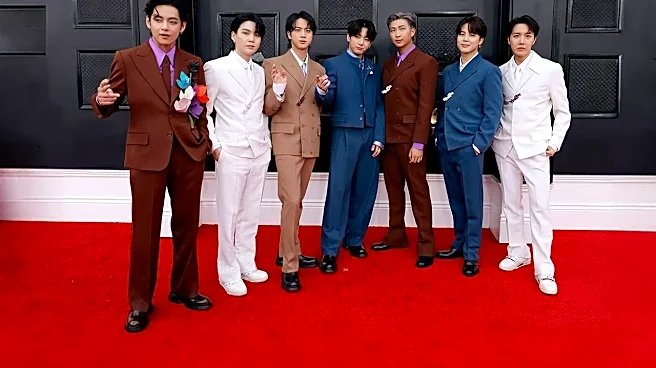
The art of group coordination has evolved. While the late '90s and early '00s were famous for nearly identical outfits, today's top groups often opt for a more nuanced approach. Instead of wearing the exact same suit, they’ll wear different looks from the same designer or stick to a complementary color palette. K-pop superstars BTS are masters of this modern method. At various awards shows, they've appeared in coordinated Louis Vuitton or Givenchy ensembles, where each member's outfit is unique but clearly part of a greater whole. This strategy allows for individual personality to shine through while maintaining the powerful effect of group unity, proving the trend has adapted rather than faded.
The Undeniable Power of Nostalgia
Ultimately, our love for coordinated group looks is deeply tied to nostalgia. It reminds us of the golden age of boy bands and girl groups, a time when the collective was just as important as the individual star. Seeing a group in matching attire triggers a fondness for that era of pop music. It’s a visual callback to groups like the Spice Girls, Destiny's Child, and NSYNC, who defined a generation with their music and their style. Even as solo artists dominate the charts, the sight of a band moving in perfect stylistic sync remains a deeply satisfying and powerful move, reminding us that sometimes, being part of a team is the coolest look of all.