







The Father of Texas Blues
Born blind near Coutchman, Texas, around 1893, Lemon Jefferson emerged from the world of sharecropping to become one of the most influential musicians of the 20th century. [1, 2, 3] Before him, the solo male blues artist with a guitar was not a commercial
force. He was a pioneer, an itinerant entertainer who honed his craft at parties, on street corners, and in the bustling Deep Ellum district of Dallas, a burgeoning hub for the blues. [2, 3, 5] It was there he met and played with other legends like Lead Belly and mentored a young T-Bone Walker, teaching him the basics of blues guitar. [1, 6] When Paramount Records brought him to Chicago to record in the mid-1920s, the world was introduced to a sound that was stark, innovative, and utterly his own, establishing him as one of the first commercially successful country-blues artists. [2, 8]
A Guitar That Spoke a New Language
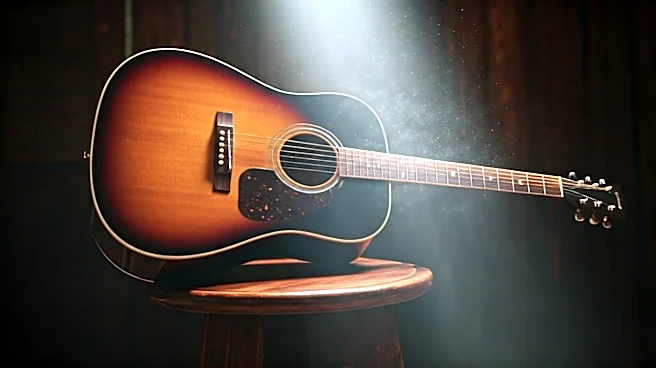
Jefferson's contemporaries were often unable to imitate his style, a key reason for his lasting uniqueness. [1] While the 1920s country blues had many distinct regional flavors, Jefferson’s guitar playing was exceptionally intricate. [11, 12] He employed a fast, complex, single-note picking style that was more akin to ragtime piano, creating a conversation between his high, mournful vocals and his instrument. [3, 5, 8] This call-and-response technique, full of melodic runs, bent notes, and improvisational flourishes, was a departure from simpler, more rhythmic approaches. [3, 4] It wasn't just accompaniment; his guitar had its own voice, a technique that would become a cornerstone of the Texas blues sound he is credited with founding. [1, 7] His virtuosic playing made the guitar a lead instrument, a concept that would echo for decades.
The Sound of Unfiltered Reality
Beyond his technical skill, Jefferson’s power came from his raw authenticity. His high, wailing voice and his lyrics—which ranged from humorous to deeply poignant—were a direct conduit of emotion. [3, 6] He sang about life as he knew it, with a lyrical complexity and honesty that stood out. [6] While some urban blues of the era were becoming more polished for theater audiences, Jefferson's music retained the raw, rural edge of a man singing for his supper until four in the morning. [1, 14] He even recorded spirituals under the pseudonym Deacon L.J. Bates, showcasing a versatility that was rooted in the broad songster tradition. [3, 4, 6] This combination of advanced technique and unfiltered feeling created a sound that felt both timeless and intensely personal, allowing it to connect with listeners long after his mysterious death in Chicago in 1929. [3]
The Blueprint for Generations to Come
Jefferson’s true staying power is measured by the generations of musicians who followed his lead. His direct influence can be heard in the work of fellow blues giants like Lightnin' Hopkins and B.B. King, who cited Jefferson as a major inspiration. [1, 7] But his impact didn't stop at the blues. His song "Matchbox Blues" famously found its way to The Beatles, who recorded a rockabilly version after hearing a take by Carl Perkins. [1, 5] Artists as diverse as Bob Dylan, Chet Atkins, and the Grateful Dead have covered his work or cited his influence. [5, 8] The Rock and Roll Hall of Fame recognized his 1927 recording of "Matchbox Blues" as one of the 500 songs that shaped rock and roll. [1, 5] He was also part of the inaugural class of inductees into the Blues Hall of Fame in 1980. [1, 3] His intricate guitar solos and role as a self-accompanied solo artist opened the door for countless others to follow. [7]