


The Anatomy of a Shadow
From his very first appearance in 1939, the core elements were there. Co-creators Bill Finger and Bob Kane pieced together a visual identity from pulp heroes like Zorro and The Shadow, but the flourishes made it unique: the scalloped, bat-like cape and a menacing
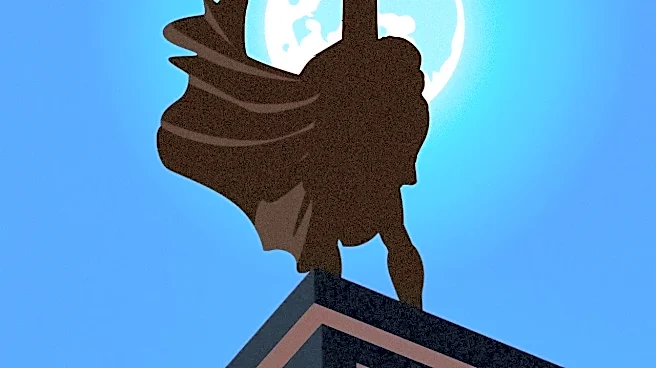
cowl with pointed ears. While the details have shifted over 80-plus years—the length of the ears, the shape of the chest emblem, the color of the suit—the fundamental silhouette has remained remarkably stable. It's a design masterclass in shape language. The sharp, triangular points of the ears and cape suggest danger and aggression, while the vast, flowing cape creates an organic, almost supernatural form that breaks the human outline. This allows Batman to appear larger than life, a creature of the night rather than just a man in a suit. It’s a design that is instantly identifiable, whether rendered in stark black and white by Frank Miller or given dynamic life by Neal Adams.
A Weapon of Fear
Batman’s mission isn't just to fight criminals, but to terrorize them. He chose the bat to project his own childhood fear onto the 'superstitious and cowardly lot' of Gotham's underworld. The costume is the primary tool for this psychological warfare, and the silhouette does the heavy lifting. The cowl hides his eyes, stripping him of human expression and turning him into an implacable force. The cape is used to conceal his body, making it difficult for opponents to read his movements or even get a clear sense of his physical dimensions. In the shadows of Gotham, he isn’t a man; he’s a shape, a myth. Artists and directors have long understood this, often introducing him first as a looming shadow on a wall or a jagged outline against the sky, letting the fear do its work before a single punch is thrown. It's a presence that suggests something both unnatural and unstoppable.
A Tool for Storytelling
Beyond its psychological impact, the cape and cowl are powerful narrative devices. The cape, in particular, acts as an extension of Batman's emotional state. In the hands of a skilled artist, it can billow with rage, wrap around him for stealth, or hang limp in moments of defeat. Its sheer mass allows for dramatic and fluid movement, making him seem both graceful and powerful as he glides over the city or drops into a fight. Functionally, it has been depicted as a bulletproof shield, a fire blanket, and a glider. But its greatest utility is visual. The silhouette alone can set the mood of a panel or a scene. A wide shot of that distinct shape perched atop a gargoyle instantly communicates loneliness, vigilance, and a city under watch. It’s a shorthand that requires no words, conveying everything the reader needs to know about the Dark Knight's eternal vigil.
An Enduring, Unbreakable Symbol
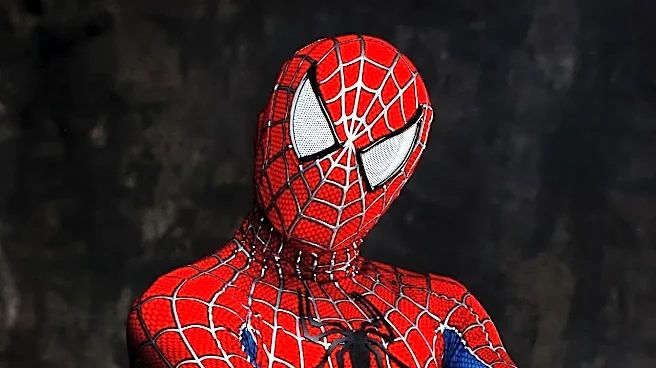
Few characters in any medium can be so reliably identified by their outline alone. Superman has his 'S' shield and Spider-Man his mask, but Batman's entire form is his logo. This has allowed the character to be endlessly reinterpreted across comics, television, and film without losing his core identity. From the campy charm of Adam West's era, where the yellow oval was added to the chest, to the gritty, armored realism of modern film adaptations, the pointed ears and scalloped cape remain. They are the visual anchor. This timeless silhouette ensures that no matter how much the man beneath the mask changes, the symbol of the Bat remains incorruptible and everlasting, just as Bruce Wayne intended. It is the perfect fusion of form, function, and narrative, making it not just one of comics’ strongest silhouettes, but one of the most powerful pieces of character design in popular culture.