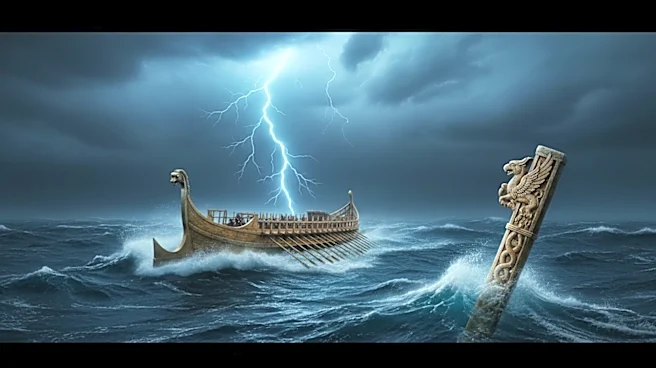






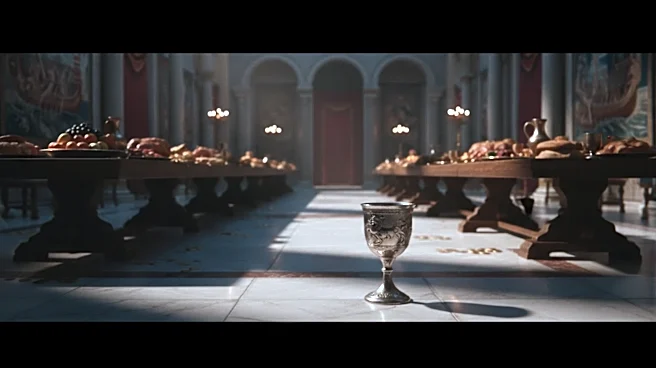




Friday Night: Prep for the Voyage
Before you read a single line, get your bearings. First, choose your translation. For a fast-paced, modern, and highly readable experience, many recommend Emily Wilson’s 2018 translation, the first by a woman. If you prefer a more dramatic, cinematic
feel, Robert Fagles' version is a popular choice for first-timers. Don't get paralyzed by choice; both are excellent entry points. Next, understand the structure. The story starts in medias res, or "in the middle of things." You won't meet the hero, Odysseus, until Book 5. The first four books, known as the "Telemachy," follow his son, Telemachus, searching for his long-lost father. Finally, glance at a character list. Knowing the key players—Odysseus, Penelope, Telemachus, and the gods Athena and Poseidon—will prevent confusion.
Saturday Morning: The Search and the Storyteller
Dive into the Telemachy (Books 1-4). You’ll see the chaos in Odysseus's home, where arrogant suitors are pressuring his wife, Penelope, to remarry. This section establishes the stakes: Odysseus isn’t just on an adventure; he’s trying to reclaim a kingdom in crisis. Then, in Book 5, you finally meet the man himself, stranded on an island, longing for home. He soon washes up on the shores of Phaeacia, where he is taken in by the king. This is where the narrative makes its most famous turn. From Books 9 through 12, Odysseus himself becomes the storyteller, recounting his famous wanderings in a long flashback. Your goal for the morning is to get through these framing sections and arrive at the start of Odysseus’s tall tales.
Saturday Afternoon: Monsters, Magic, and Mayhem
This is the blockbuster portion of the epic (Books 9-12). You’ll sail through Odysseus’s greatest hits: his encounter with the monstrous, man-eating Cyclops; his entanglement with the sorceress Circe; his journey to the Land of the Dead; and his harrowing passage between the sea monster Scylla and the whirlpool Charybdis. Don’t get bogged down in every detail. Instead, focus on the recurring themes. Notice how Odysseus constantly relies on his cunning and trickery to survive. Pay attention to the theme of xenia, or guest-friendship, the sacred Greek code of hospitality that is constantly tested. This section is designed to be a thrilling performance, full of suspense and supernatural encounters, so let yourself get swept up in the action.
Sunday Morning: The Homecoming
After Odysseus finishes his story, the Phaeacians finally grant him passage home. He arrives on the shores of Ithaca in Book 13, and the tone of the epic shifts dramatically. The fantastical adventure gives way to a tense, grounded story of disguise and reconnaissance. Guided by his protector, the goddess Athena, Odysseus disguises himself as an old beggar to assess the situation at his palace. This section (Books 13-18) is a masterclass in dramatic irony, as you, the reader, know his true identity while his own family and servants do not. He spends this time testing the loyalty of his old swineherd, Eumaeus, and his son, Telemachus, who has since returned from his own journey. Focus on the theme of testing—Odysseus needs to know who he can trust before he makes his move.
Sunday Afternoon: Revenge and Reunion
Now for the climax. In the final stretch (Books 19-24), the careful planning pays off. The tension builds as Penelope, still unaware of his identity, proposes an archery contest to finally choose a suitor. The challenge is to string Odysseus’s great bow and shoot an arrow through twelve axe heads—a feat only he has ever accomplished. After the suitors all fail, the disguised Odysseus effortlessly completes the task, sheds his rags, and, with the help of Telemachus and loyal servants, unleashes his long-awaited vengeance. The bloody battle in the hall is followed by the epic's emotional core: the reunion with Penelope. Ever cautious, she tests him one last time before finally accepting that her husband has returned after twenty years. Reading these final books delivers the powerful resolution to a journey that is not just about returning home, but about reclaiming it.