





A Different Kind of Addams
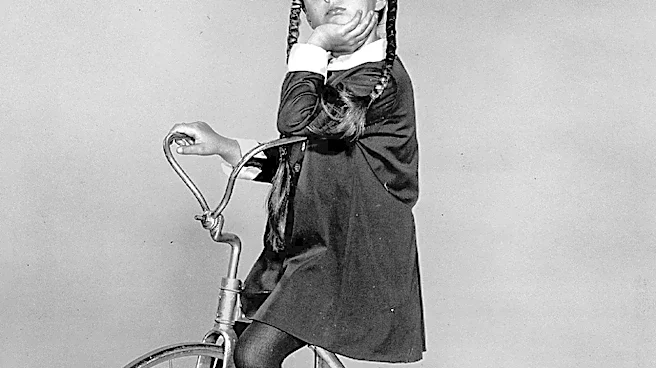
To understand the impact of Christina Ricci's Wednesday, you have to remember the character she wasn't. The original Wednesday, born from Charles Addams' morbidly funny New Yorker cartoons and brought to life by Lisa Loring in the 1960s sitcom, was sweet
and whimsical. She was a peculiar child in a family of eccentrics, more strange than menacing, who enjoyed playing with her headless doll and teaching the butler to dance. This version was a part of the family ensemble, a far cry from the cutting, central figure she would become. The 1991 film, 'The Addams Family', took that black-and-white blueprint and plunged it into a new kind of darkness.
The Birth of a Goth Icon
When the 1991 movie arrived, it re-introduced the family with a sharper, more gothic edge. At its center was an 11-year-old Christina Ricci, whose portrayal of Wednesday was a revelation. Gone was the bubbly, if macabre, child. In her place stood a girl with an unblinking stare, a deadpan delivery that could curdle milk, and a casually homicidal relationship with her brother, Pugsley. Ricci gave Wednesday a profound and unnerving stillness. Her wit was as sharp as a guillotine, and her intellect was formidable. She wasn't just a quirky kid; she was a pint-sized sociopath with a strict moral code, who questioned everything and suffered no fools. This performance instantly set the tone for how the character would be seen for generations.
Peak Wednesday in 'Addams Family Values'
If the first film introduced the new Wednesday, the 1993 sequel, 'Addams Family Values', perfected her. It’s widely considered the rare sequel that surpasses the original, largely because it gives Wednesday her own powerful storyline. Sent to a chipper summer camp, she becomes a symbol of rebellion against forced conformity. Her legendary monologue during the camp's Thanksgiving play is a masterclass in righteous, deadpan fury. In a moment seared into millennial memory, she hijacks the saccharine play to deliver a blistering indictment of colonialism before leading a misfit revolt and burning the pilgrim set to the ground. It was here that Wednesday transformed from a creepy kid into a counter-cultural hero, an icon for anyone who ever felt like an outsider.
The Ripple Effect on Pop Culture
Ricci's performance didn't just redefine a character; it created an archetype. Her Wednesday became the blueprint for the 'goth girl' in pop culture, influencing fashion and attitudes for decades. The unblinking stare, the morbid one-liners, and the staunch refusal to smile became shorthand for a specific kind of intellectual, outsider cool. Every Halloween, the simple black dress, white collar, and severe braids become one of the most recognizable and enduring costumes. More than that, she became the prototype for the smart, sarcastic, and slightly dangerous young woman seen across countless shows and films since. She gave a voice to a generation of kids who found solace in the shadows and power in being different.
An Enduring Halloween Fixture
While the entire Addams clan is beloved for their macabre charm, Ricci's Wednesday is the family's anchor in modern pop culture and the key to their status as a Halloween institution. Morticia and Gomez are relationship goals, but Wednesday is an aspirational identity. Her character is the most imitable, the most quotable, and the most visually iconic element of the 90s films. Even recent portrayals, like Jenna Ortega's in the 'Wednesday' series, build upon the complex, sharp-edged foundation that Ricci laid. Ortega’s version is an evolution, but it operates in a world that Ricci’s performance built. It is a testament to the power of that singular, game-changing performance that, over 30 years later, when we think of 'The Addams Family' at Halloween, the first image that comes to mind is often a small girl in pigtails, ready to set the world on fire.